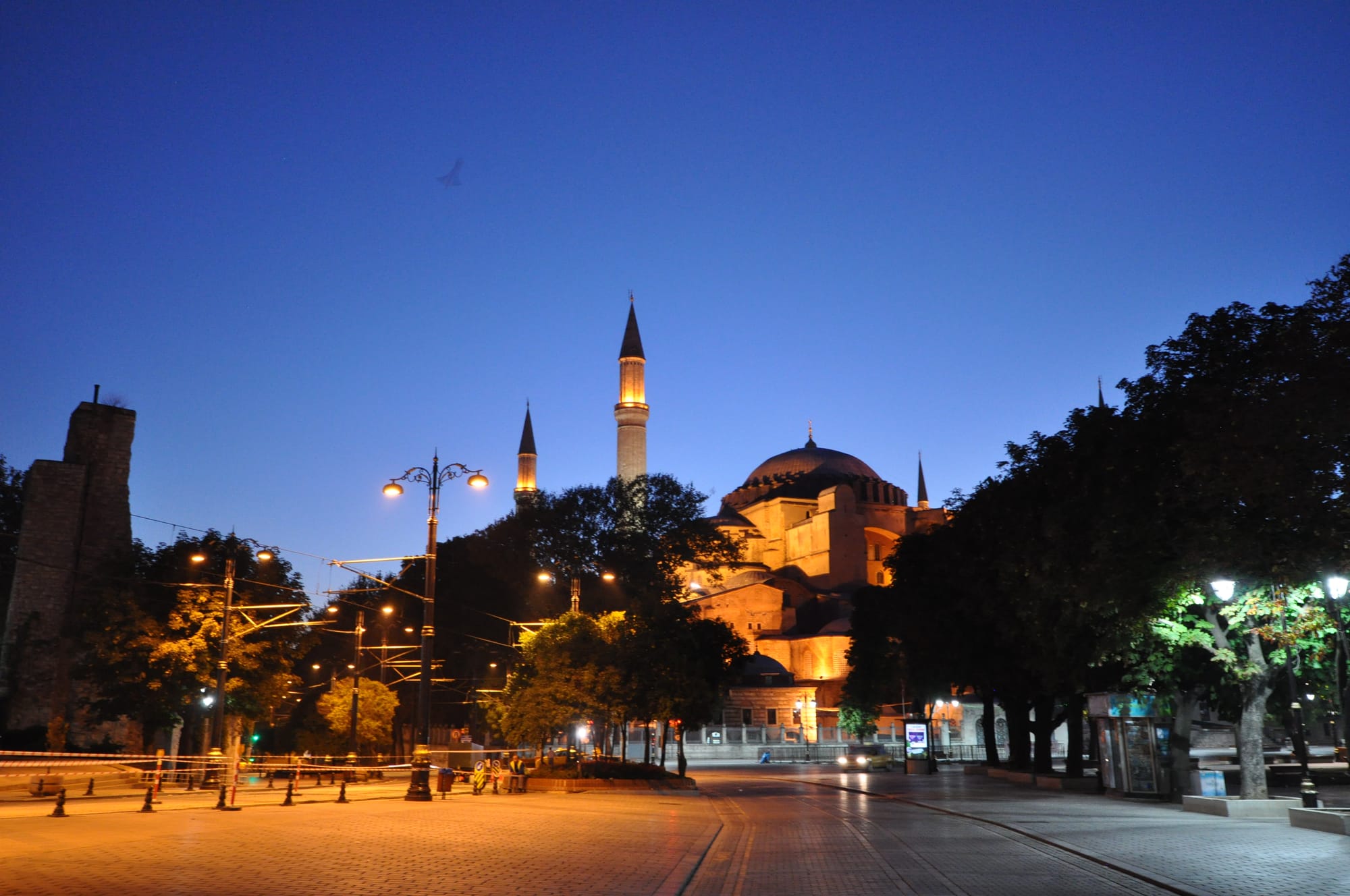
Roughly 3,000 tons of mud and debris have been hauled out of the ancient Roman tunnel network beneath Istanbul's Hagia Sophia since February 2025, Türkiye Today reported on 17 October 2026. According to the outlet, the clearance has opened up parts of the underground infrastructure that could not be reached before, along with structures older than the present monument. Fox News picked the story up on 13 November, saying the findings were announced by archaeologist Hasan Fırat Diker at a presentation in Istanbul.
What Diker said
Diker, whom Türkiye Today describes as a professor and a member of Hagia Sophia's Scientific Board, set out the findings in a talk called "The Archaeology of Hagia Sophia" at the BlackBox venue inside the Türkiye Is Bank Painting and Sculpture Museum in Istanbul. Fox News dates the presentation to 16 October. Türkiye Today says he spoke as part of the "Istanbul Conversations" series organized by Is Sanat and moderated by Cengiz Ozdemir.
Diker said the system was Roman work: part of the city's water distribution and drainage, and at the same time a protected, secure space underground. He likened the web of passages to a modern metro, and said the tunnels were designed about 1,600 years ago to take rainwater off the surrounding streets and empty it into the sea.
By Diker's account, 170 meters (558 feet) of an underground route have now been cleared. The route is connected to a fifth-century Roman street that runs from the Sarayburnu area toward Little Hagia Sophia. Türkiye Today says German archaeologist Alfons Maria Schneider first uncovered and documented a section of that street.
Known for decades, hard to reach
Fox News notes that the underground network has been known for decades, though much of it has remained difficult to access. Türkiye Today reports that the infrastructure had previously been documented by Schneider and the Byzantine Institute of America in 1943, and that Diker's team carried out additional surveys and documentation inside and outside the monument in 2017. Fox News says the ongoing excavation work is allowing researchers to examine previously buried sections of the site.
Layers older than the present church
Diker also said two earlier buildings on the site were destroyed, making today's Hagia Sophia the third structure there. Türkiye Today says the original was destroyed by fire in the fifth century, while its successor was burned down during the Nika riots, an uprising in Constantinople. The present building was completed in 537 A.D. under Byzantine Emperor Justinian I, according to Fox News. He put the foundations of the first Hagia Sophia about 2.3 meters (7.5 feet) below today's building, a sign of how the city's ground level rose over the centuries as each period built on the last.
Diker identified the northeastern section as particularly significant because of its multiple archaeological layers. There, archaeologist Muzaffer Ramazanoglu discovered a hypogeum, an underground burial structure of four adjoining chambers, in 1946. Diker said his team had cleared both its upper and lower sections, excavating an additional 1.5 meters beneath it. "This area is older than Hagia Sophia," he said, according to Türkiye Today, explaining that the underground chambers had been filled with mud.
Beyond the tunnels, and what comes next
Diker also discussed the structures that once surrounded Hagia Sophia, including, per Türkiye Today, traces of a colonnaded courtyard recorded in descriptions by European travelers until the 17th century. He pointed to archaeological investigations by the German Archaeological Institute and a team from the United States in 1935 and 1936, saying today's research carries on excavation work that began during Mustafa Kemal Ataturk's presidency.
He said the Scientific Board was moving carefully towards opening larger parts of the underground infrastructure to visitors, and planned an exhibition project on the archaeological remains. Hagia Sophia, which means "Holy Wisdom" in Greek, served as a major center of Eastern Christianity for nearly 1,000 years until Ottoman forces converted the church into a mosque in 1453, Fox News notes; it became a museum in 1935 and a mosque again in 2020.
Sources
Fox News (2026) 'Ancient tunnels beneath famous Hagia Sophia explored after 3,000 tons of debris cleared', Fox News, 13 November 2026, available at: https://www.foxnews.com/travel/ancient-tunnels-beneath-famous-hagia-sophia-explored-after-3000-tons-debris-cleared (Accessed: 13 November 2026).
Türkiye Today (2026) 'Archaeologists remove 3,000 tons of debris from tunnels beneath Hagia Sophia', Türkiye Today, 17 October 2026, available at: https://www.turkiyetoday.com/culture/archaeologists-remove-3000-tons-of-debris-from-tunnels-beneath-hagia-sophia-3230495 (Accessed: 13 November 2026).
Picture credits
- Top picture: Hagia Sophia in Istanbul. Image: Hagia Sophia, Istanbul — Jorge Láscar, CC BY 2.0 (via Wikimedia Commons)
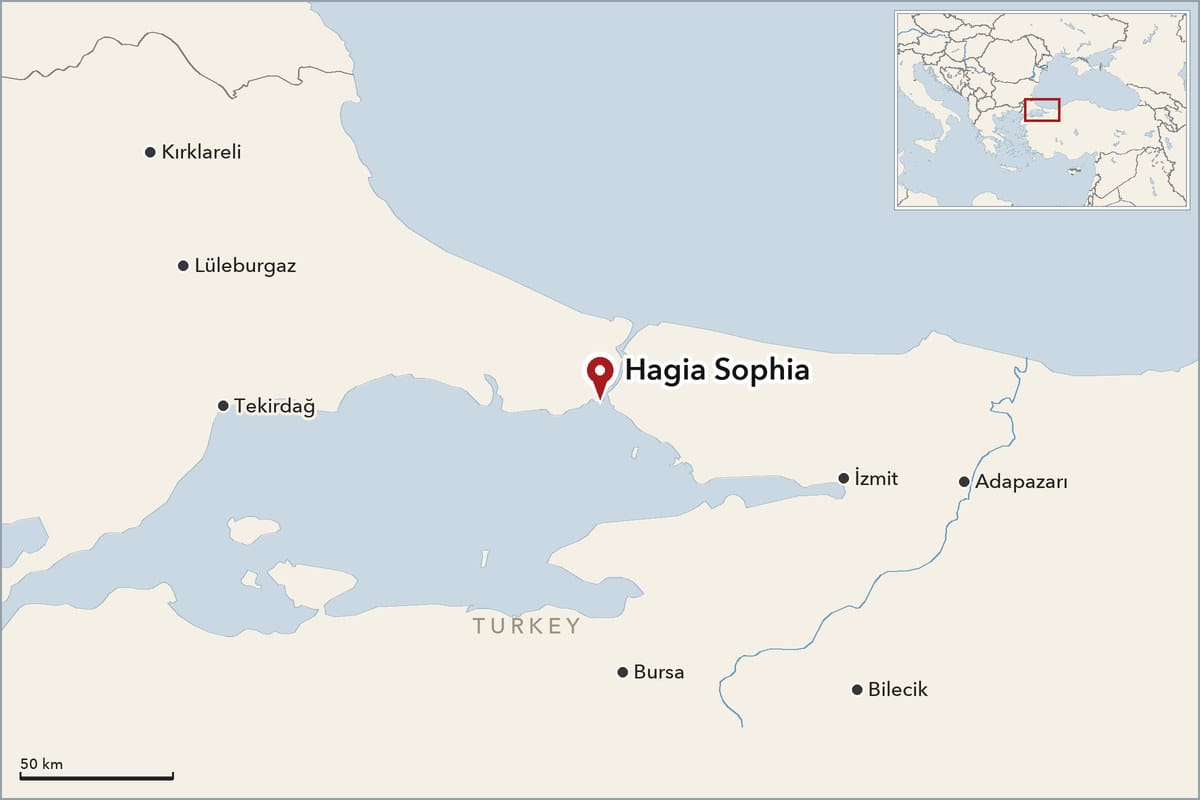
- Map: drawn from Natural Earth (public domain) and Wikidata.
