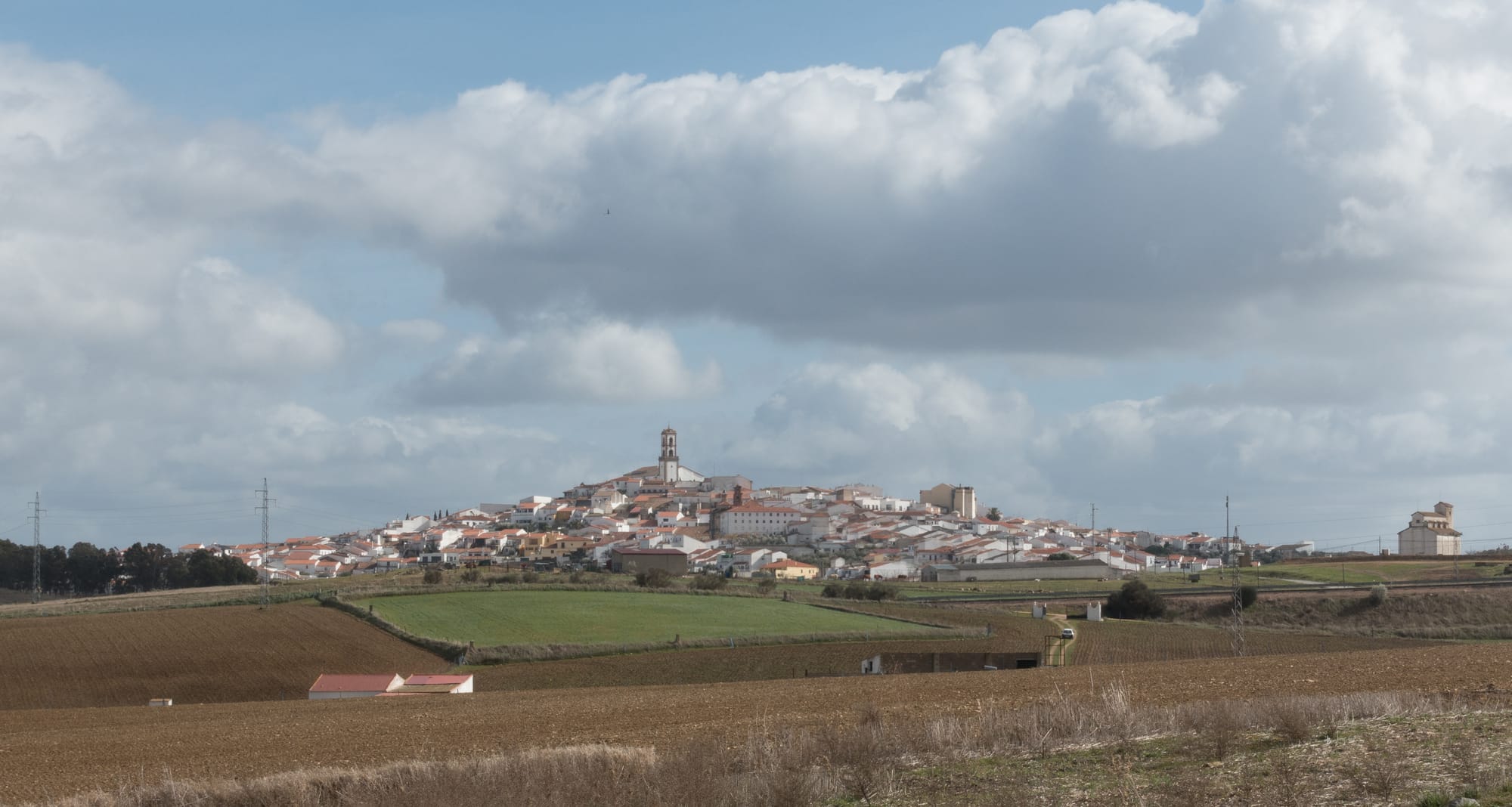
Archaeologists at the University of Córdoba say they have identified a Roman roadside stopover on the edge of the ancient town of Mellaria, close to modern Fuente Obejuna in southern Spain. The university's own announcement of 22 October 2026 calls it an "área de servicios", a service area, for people travelling between Córdoba and Mérida. The evidence is a survey of the ground. Nobody has excavated the building.
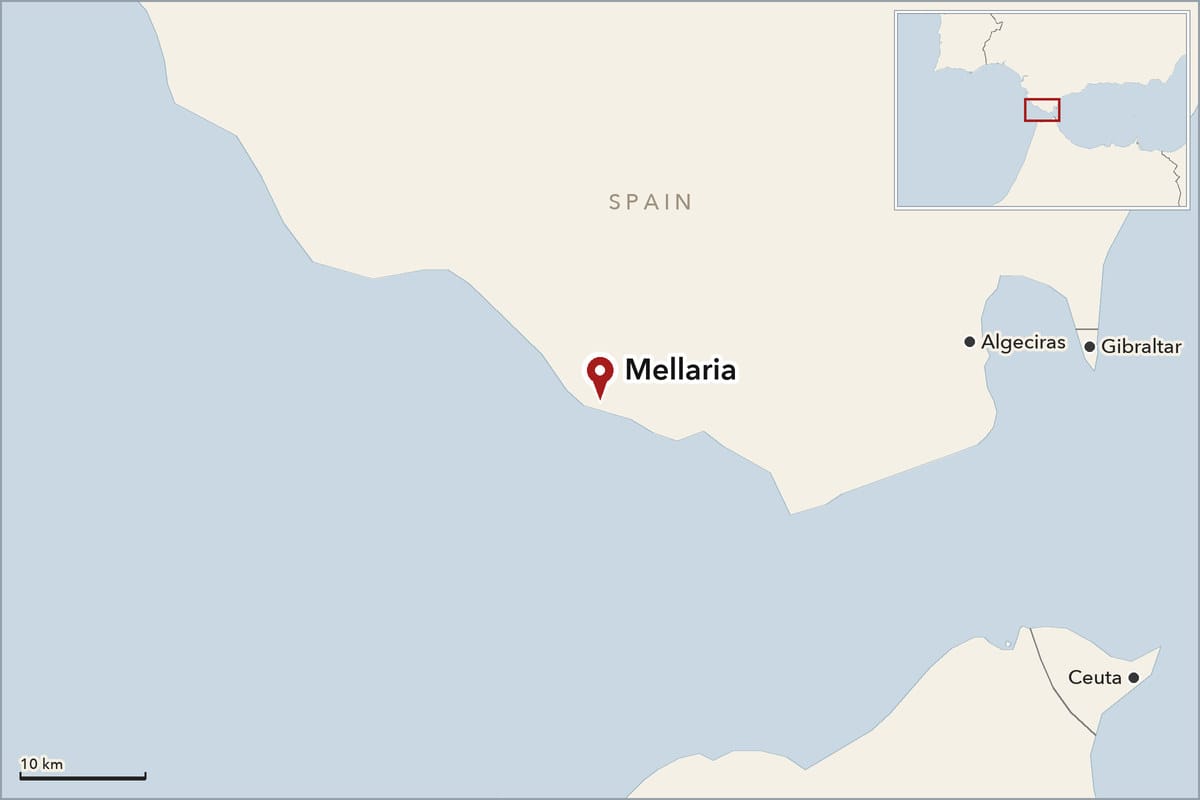
What the survey found
Mellaria, the university says, stood on the route between two Roman provincial capitals: Córdoba, in Baetica, and Mérida, in Lusitania. The HUM 1150–Unidad Patricia research group has been studying it for several years through the Ager Mellariensis project.
According to the university, the latest study used a non-invasive geophysical analysis of geomagnetic data, which records variations in the subsoil. It picked out the plan of a building 48 metres long with a total area of about 1,290 square metres. The building lies on the outskirts of the town beside the Roman road. It would have had eight rooms, a bath and a large yard, which the researchers read as a stable or a parking area for carriages and a resting place for draught animals.
The survey work was carried out at the Mellaria site between 2021 and 2023. The study was written by Miriam González Nieto and published in Journal of Archaeological Science: Reports (volume 75, 2026).
A standard-class mansio
The university describes the building as a mansio, a Roman official stopping place. It says the size and position of the Mellaria example would correspond to what the literature calls the standard class. Such buildings, it says, followed a military-barracks model and would have been meant for ordinary travellers, troops and service staff. By the university's account, putting one at the edge of town beside the road gave quick access and let horses be changed and supplies taken on without bringing heavy traffic, carriages and animals into the town itself. It contrasts these with other mansiones that were more monumental and complex and stood farther from the main roads.
The university presents the find as a step towards understanding the structure of the Roman postal service, the cursus publicus, in the Iberian Peninsula.
How firm is the reading?
La Brújula Verde, which reported on the study on 23 October 2026, is explicit about the limits. It says the identification rests on the geophysical plan and on comparisons with other buildings, not on excavation, and that the author defends architectural and typological analogy as a valid way to assign a function when digging is not possible. The same report says the "bath" comes from a very elongated room on the western side whose shape recalls the bath area at Rottweil, in Germany. So the bath is an interpretation of a plan, not an uncovered bathhouse. La Brújula Verde also reports rooms of around 15 square metres and a yard about 11 metres wide.
The road is Route XI of the Antonine Itinerary, a Roman catalogue of routes, which places Mellaria 52 Roman miles from Corduba (Córdoba), roughly 77 kilometres at 1,480 metres per mile. La Brújula Verde says the newly mapped building fits that distance.
A larger complex?
The university says anomalies in the ground around the building suggest the complex extended beyond it, forming a wide logistical and suburban landscape. About fifty metres to the north, it says, there would be a first-class building, very close to the first and connected to it.
The university's wording for that second building is conditional. On the possibility of storerooms beside the row of rooms, La Brújula Verde notes that whether they existed, and what they held, only an excavation will tell.
Sources
González Nieto, M. (2026) 'On the archaeological evidence of mansiones along the Roman roads of Hispania in the Antonine Itinerary: The case of Mellaria (Fuente Obejuna, Córdoba, Spain)', Journal of Archaeological Science: Reports, 75, 106073, available at: https://doi.org/10.1016/j.jasrep.2026.106073 (Accessed: 23 October 2026).
La Brújula Verde (2026) 'A Roman "Highway Rest Stop" With Barracks-Style Rooms and a Bathhouse Found in Southern Spain', La Brújula Verde, 23 October 2026, available at: https://www.labrujulaverde.com/en/2026/10/a-roman-highway-rest-stop-with-barracks-style-rooms-and-a-bathhouse-found-in-southern-spain (Accessed: 23 October 2026).
Universidad de Córdoba, UCC+i (2026) 'Identifican un "área de servicios" romana en Fuente Obejuna', UCC+i, 22 October 2026, available at: https://www.uco.es/ucci/es/proyecto-investigacion/item/5710-identifican-un-area-de-servicios-romana-en-fuente-obejuna (Accessed: 23 October 2026).
Picture credits
- Top picture: Fuente Obejuna, close to the Roman site of Mellaria. Fuente Obejuna, Córdoba — photo by Edmundo Saez (CC BY-SA 4.0, Wikimedia Commons)
- Map: drawn from Natural Earth (public domain) and Wikidata.
