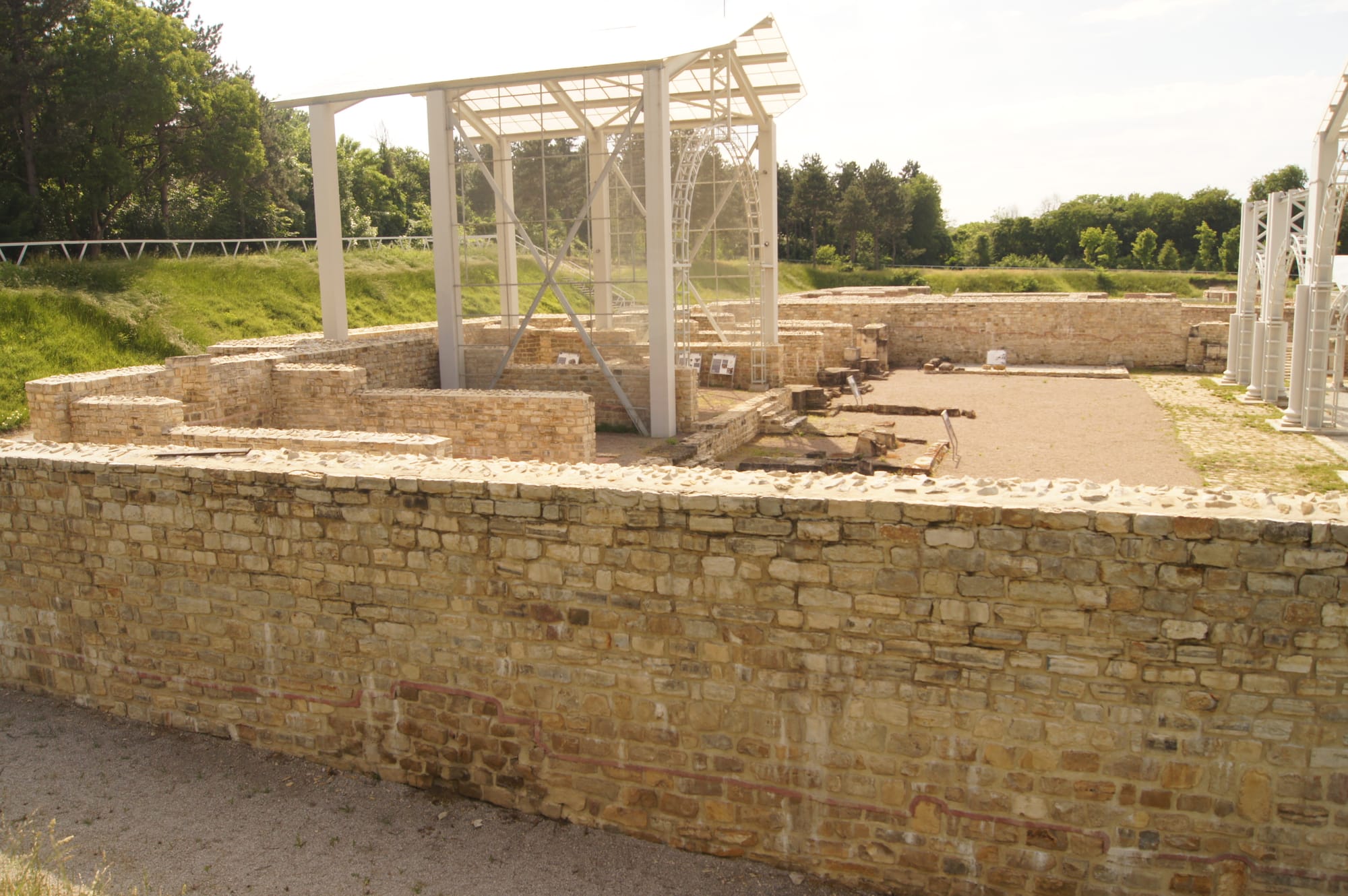
Archaeologists from Poland say they may have found the home of the man who commanded a Roman legion. The building lies at Novae, a fortress on the Danube in northern Bulgaria, and the claim is explicitly provisional. Preliminary findings suggest it was the praetorium, the residence of the legate who led the whole legion, according to a dispatch from the Polish Press Agency's Science in Poland service. The excavators say the identification still has to be confirmed.
What has been uncovered
Science in Poland reports that the team has exposed 3,000 square metres of the building. The team reports finding baths, painted wall plaster, decorated floors, sculpture and altars carrying inscriptions. Its original footprint was about 4,500 square metres, which would have made it the third-largest structure in the camp, after the commandant's office and the hospital.
Among the remains are a sizeable bathhouse and a floor laid in bricks of different colours, along with pieces of bronze furniture, figurines and high-quality pottery. Arkeonews, reporting on 27 September, adds that this season's work exposed further pools belonging to the private bath complex.
Novae was an important Roman and Byzantine military centre and the base of Legio I Italica, according to Science in Poland. Arkeonews dates the fortress to the first century CE. A joint Polish-Bulgarian team has dug there since 1960, and three Polish expeditions are working there now, including one from the University of Warsaw's Antiquity of Southeastern Europe Research Centre.
Why a legate?
The private baths are among the strongest clues, Arkeonews says. Professor Piotr Dyczek, director of that research centre, says: "Few people had private baths in Roman fortresses. There were communal baths for the entire legion. In principle, only the legate could have his own large bathhouse." He adds that "everything points to a residence", while noting that this will have to be confirmed. In his reading, the legate was "Caesar's eye and ear, making sure the legion did not rebel".
Science in Poland notes that the layouts of many Roman legionary camps are known, but that modern towns now cover large parts of many of them, so they cannot be fully excavated. Dyczek says that no residence attributed to a legate has been discovered in its entirety, and that they are always reconstructed from fragments. "If our assumptions are confirmed, we will have the first fully discovered structure of this type," he says.
That conditional is the point. A big building with baths and fine fittings is strong circumstantial evidence for an elite occupant. Whether it is the commander's house is, for now, the team's working interpretation.
Gods, altars and an imperial head
The smaller finds are also notable. Science in Poland lists a small bronze figurine of the god Priapus, with only five similar artefacts known so far from the Lower Danube area. The team also found the head of the god Mithras and a fragment of a marble head from an official imperial portrait. Two inscribed altars came to light, one of them almost intact with its full inscription. Another find is an unusual architectural element shaped like a pine cone, which the report says is rarely found on the Lower Danube.
Arkeonews says the Mithras head and the imperial portrait "bring religion and imperial identity into the same space as luxury and domestic life".
A much later chapter
The dig also produced evidence from long after the legions. For the first time at Novae, archaeologists uncovered the remains of late ancient buildings linked to the Avars, a nomadic people who appeared in Europe in the mid-6th century. Science in Poland says the discovery could shed new light on the Avars' migration south of the Danube.
Dyczek describes the settlements in what is now Bulgaria as small, which he takes to mean the Avars stayed in these areas only briefly. At Novae the team found one very large house, which he says was most likely the leader's, and a few small houses of about five square metres each, all with fireplaces. A very rare Avar earring turned up as well; Dyczek calls it the first discovery of its type in northern Bulgaria.
The river and the missing port
This year's low Danube has also exposed stretches of riverbank that are usually under water, and the team has surveyed them. Science in Poland reports that they documented ancient architectural elements, pottery fragments and roof tiles exposed by the low water. The report says the findings could help solve one of Novae's major mysteries: where its ancient port was located.
Sources
Buyukyildirim, O. (2026) 'Archaeologists Uncover a Vast Residence Built for a Roman Legion Commander', Arkeonews, 27 September 2026, available at: https://arkeonews.net/archaeologists-uncover-a-vast-residence-built-for-a-roman-legion-commander/ (Accessed: 23 October 2026).
Krajczyńska-Wujec, E. (2026) 'Polish archaeologists uncover "lavish home of Roman legion commander"', Science in Poland (PAP Foundation), 22 October 2026, available at: https://scienceinpoland.pl/en/news/news%2C115061%2Cpolish-archaeologists-uncover-lavish-home-roman-legion-commander.html (Accessed: 23 October 2026).
Picture credits
- Top picture: The Roman fortress of Novae, on the Danube in northern Bulgaria. Image: Novae principia: Rjdeadly, CC BY-SA 4.0, via Wikimedia Commons
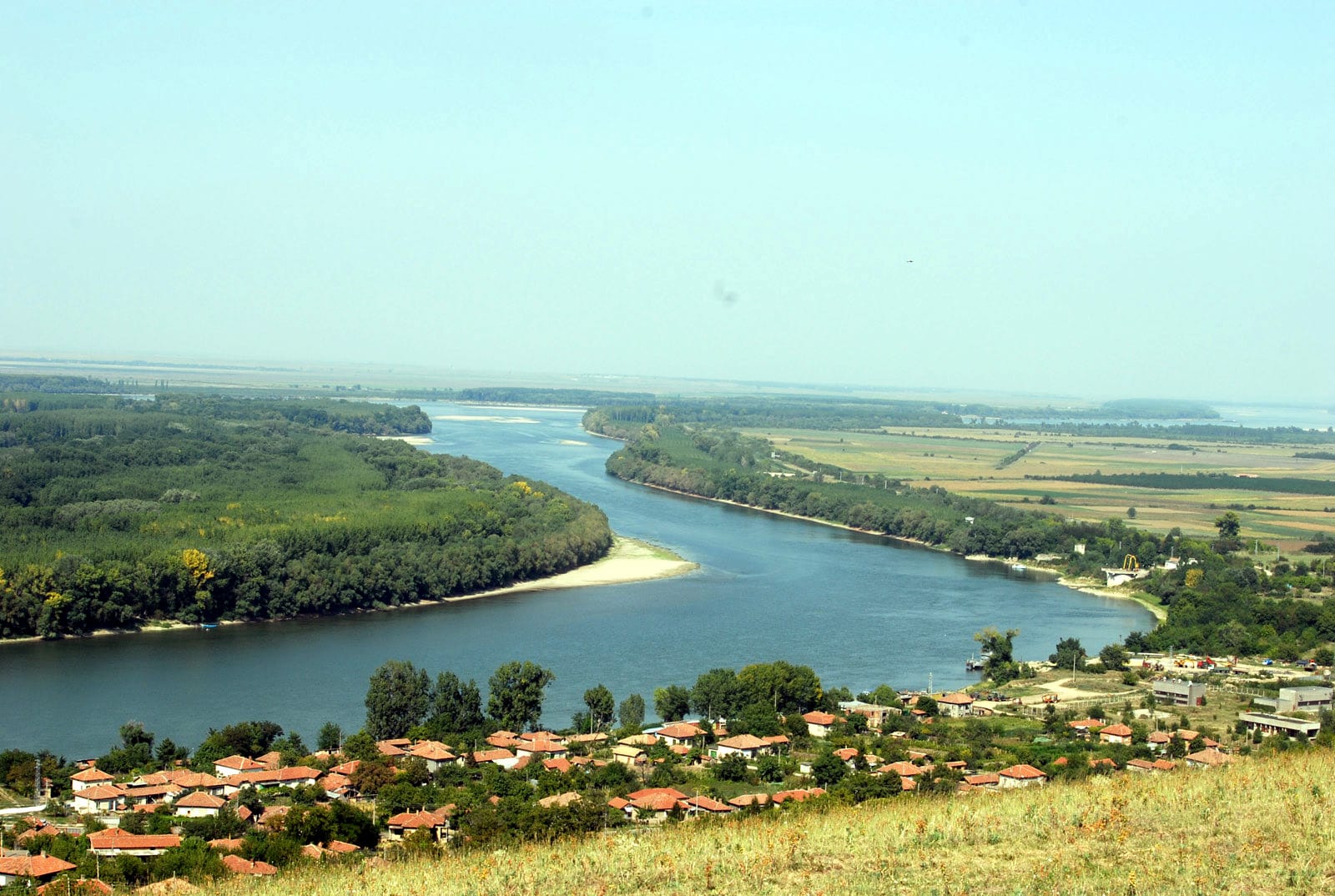
- The Danube near Vardim in Svishtov Municipality, northern Bulgaria. Novae lies near the town of Svishtov. Image: Danube near Vardim, Svishtov Municipality: Janusz Recław, CC BY-SA 4.0, via Wikimedia Commons
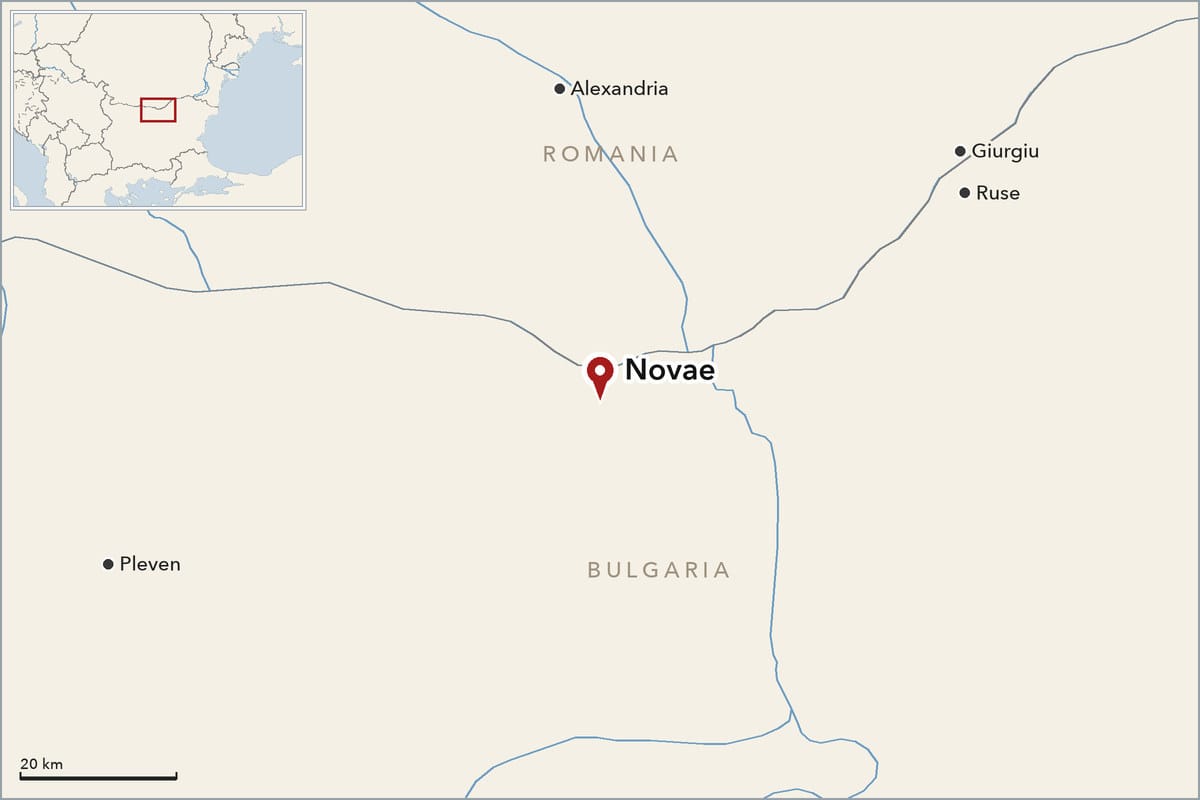
- Map: drawn from Natural Earth (public domain) and Wikidata.

