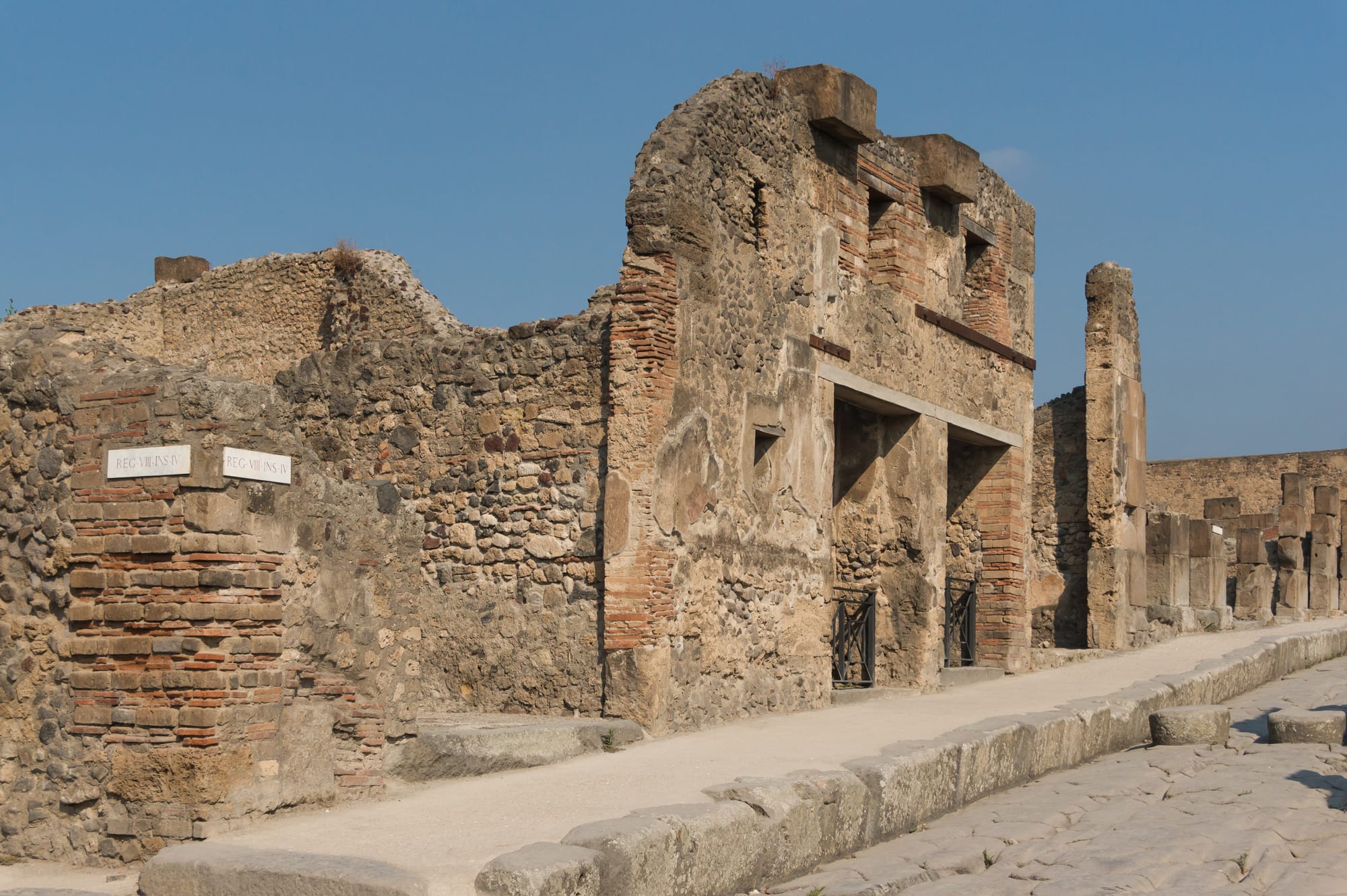
On 29 October 2026, the Parco Archeologico di Pompei announced that archaeologists had recovered the contents of a wardrobe from house IX 11, 7, in the central area of the city buried by Vesuvius in AD 79. The park describes a wardrobe that was never opened again, and says the excavation data allow it to be reconstructed in full. What it found inside is a small, specific inventory of one household's belongings. The park is also open about how little that inventory says about whose they were.
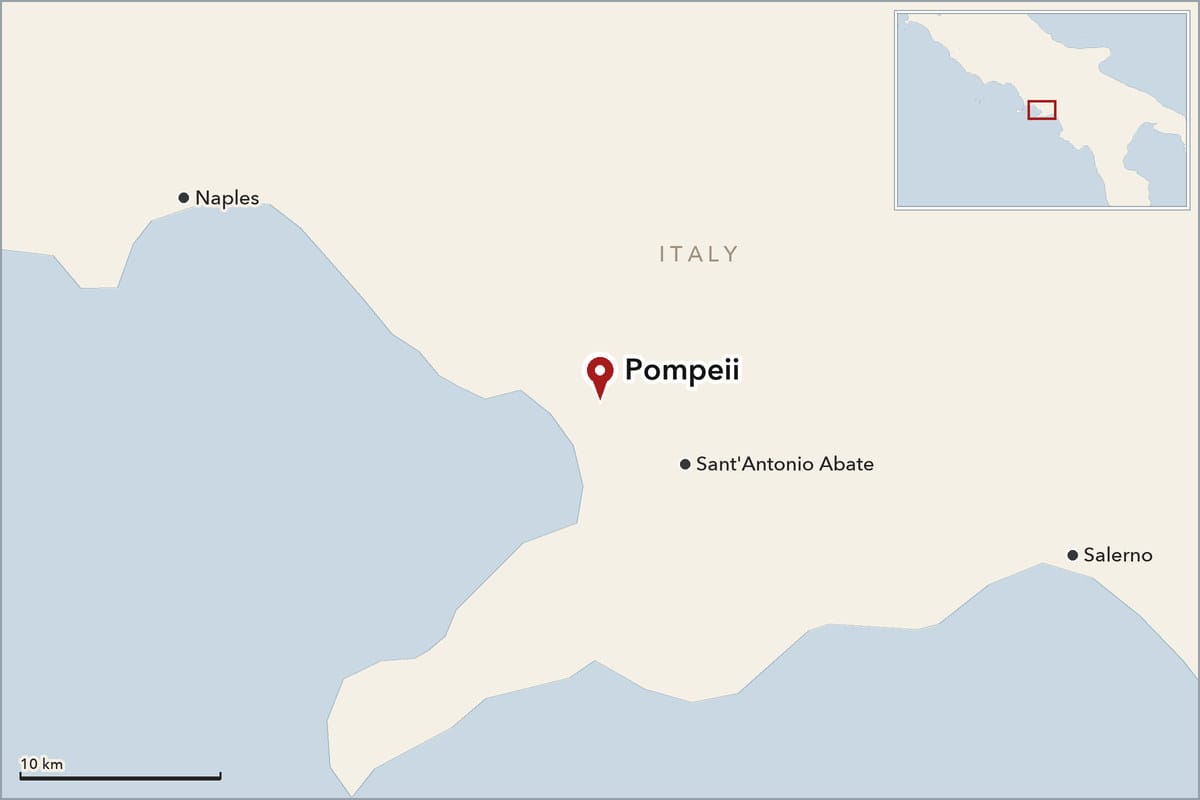
Where it was found
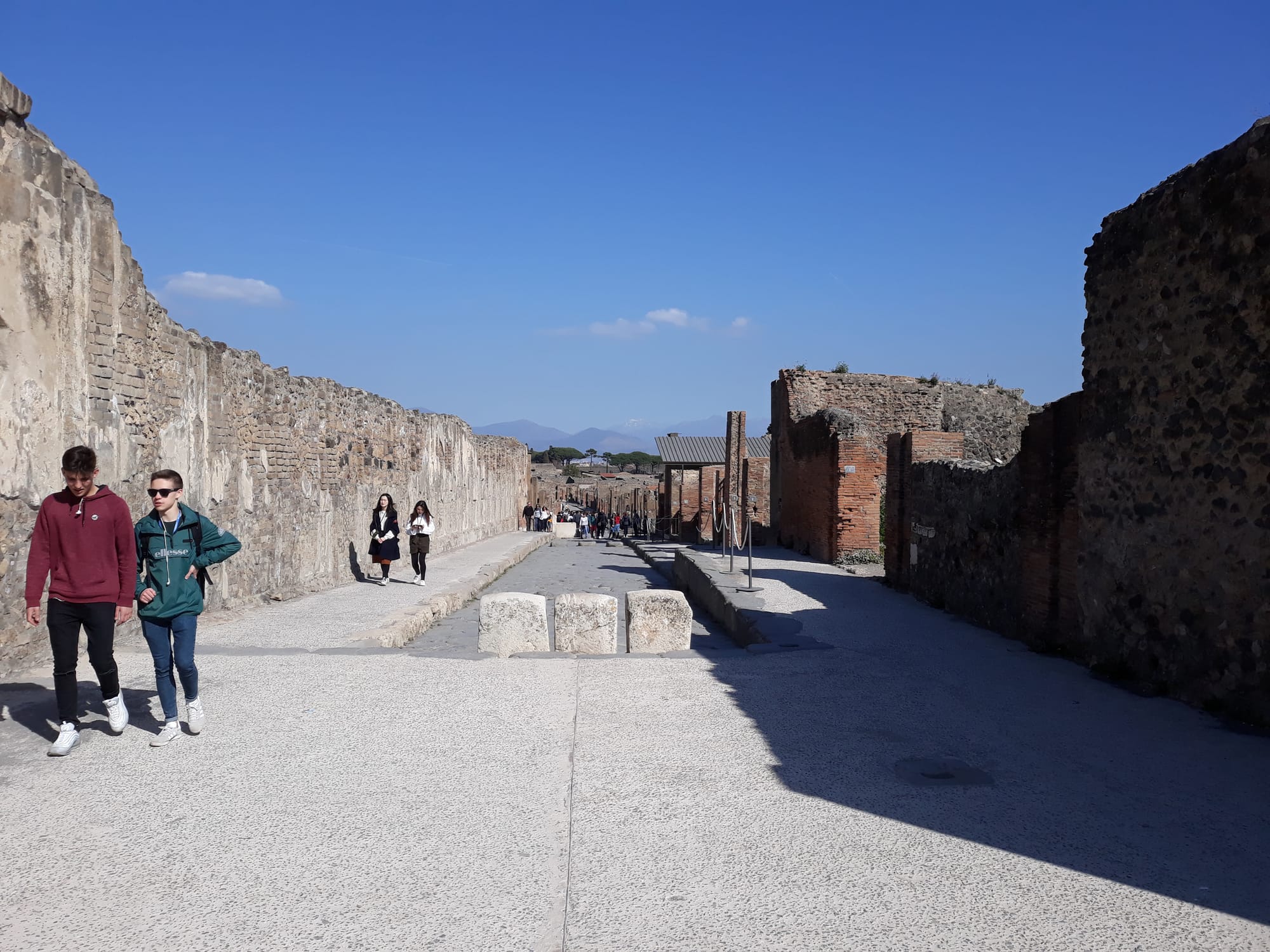
The house is also known as the house of Cornelius Maximus and stands on Via dell'Abbondanza, a busy street then as now, in the park's words. That name is tentative. The park says the house's facade was attributed with doubt to a person called Cornelius Maximus, on the basis of inscriptions that can no longer be seen.
The facade was already excavated in 1912. Only now has part of the rooms behind it been investigated, as part of the park's restoration and accessibility project for the neighbouring Insula dei Casti Amanti.
What was inside
According to the park, as relayed by Euronews, the wardrobe held:
- make-up tools, including tweezers and a spatula for mixing pigments
- a glass balsamarium, a perfume burner and a bronze lamp
- lead weights, which the park says were probably used in a selling business and kept in a small wooden box of which only faint traces remain
- vases and pots in bronze, glass and ceramic, including a refined little jug decorated with pine-scale motifs
- a necklace of at least 24 miniature objects in faïence, bone, glass paste and rock crystal
- 38 bronze coins in a small basketry container made of plant material
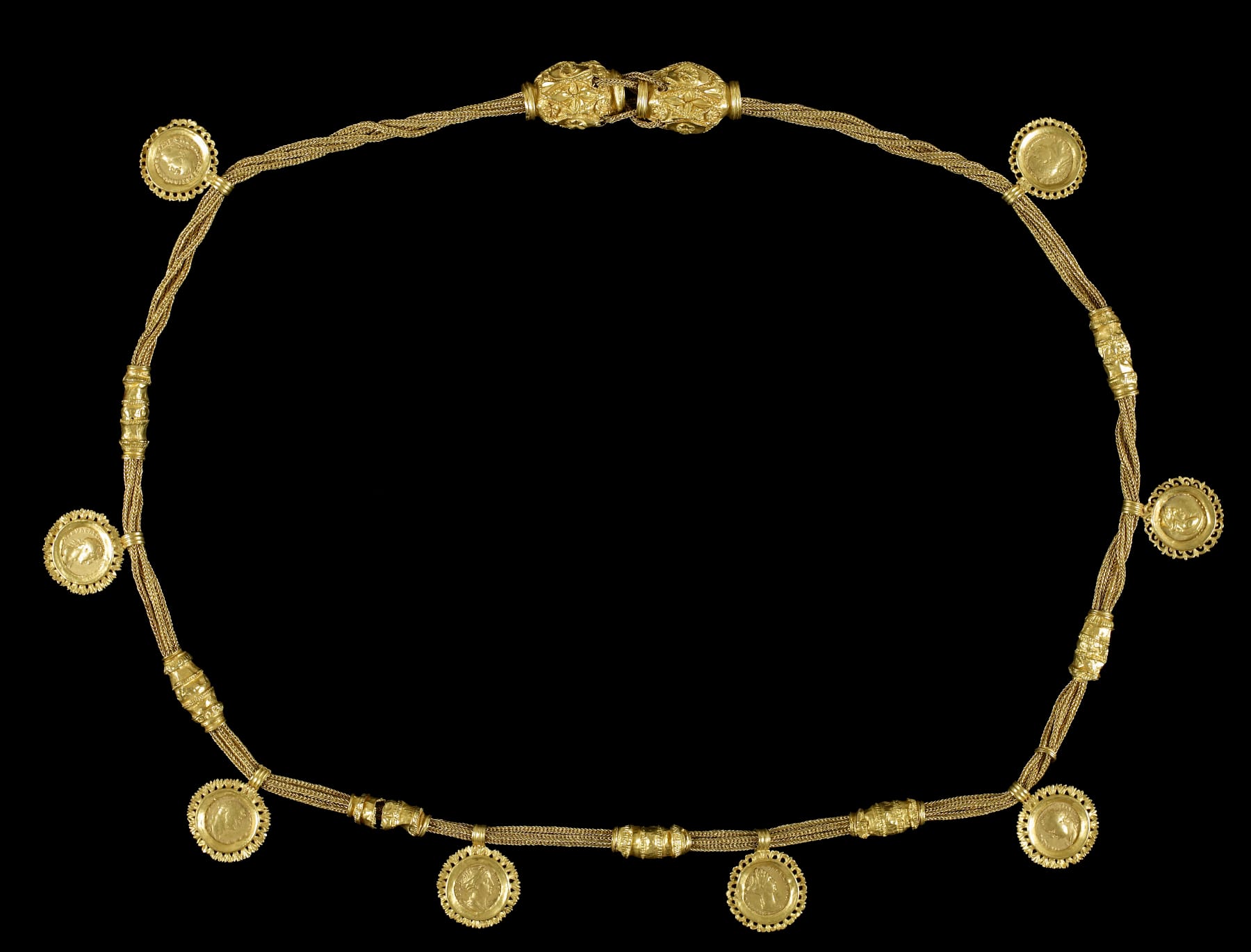
The necklace is the piece the park dwells on. Every element is pierced for suspension, and the pendants represent deities (the park identifies Bes and Mercury), feet and hands, pine cones and bunches of grapes. The park says objects like these were sometimes taken for "magical" items used in spells and potions, but are in fact crepundia, literally "rattles". They were necklaces of amulets given to children for protection and so that the children could be heard as they moved.
Adults sometimes kept them too. The park says they were often stored in small boxes or, as here, in cloth bags inside wardrobes, apparently as keepsakes of a childhood of which little else remained. It links this to the high geographic mobility of the Roman world, in which many people lived far from their parents and the places they grew up.
The coins, and a question left open
The park reads the coins as a clue. Their presence in particular, it says, suggests that the owner or owners did not have time to recover objects of economic or emotional value.
From there the park sets out possibilities rather than a verdict. If the occupants were in the city during the catastrophe, they will have tried to flee. If they escaped, the park says, they would not have returned to dig under the floors for their belongings, unlike others whose efforts recent excavations have revealed. Or, the park notes, citing the historian Tacitus, they may have been among those who died without heirs, and whose property would have been used for a refounding of Pompeii that never took place. The park's own conclusion is that these questions are destined to remain open.
A woman's wardrobe, or just a wardrobe?
The park's account says the finds evoke the life of a woman of Pompeii, its own headline calls it the wardrobe of a woman who never returned, and Euronews's headline calls it a woman's wardrobe. The park's director, Gabriel Zuchtriegel, is more careful. In the text Euronews carries, he said: "We cannot reconstruct with certainty the identity of the person who lived in the house, but these fragments bring us closer to their everyday life."
That is the sound reading, in my view. The wardrobe gives an inventory of a household's belongings: grooming, light, trade, memory and money. It does not give a name, and the park does not claim one.
The house around it
The room with the wardrobe has Fourth Style wall paintings that the park attributes to the workshop on Via di Castricio. It says they indicate a certain standard of living, in line with the house's central position on one of the city's main arteries.
The park also says various works were under way when the eruption came, and that they must have affected how liveable the house was. It adds that its knowledge of the house remains partial.
Two mice in an amphora
The excavation also turned up the skeletons of at least two mice, found inside an amphora on a mezzanine. Analyses in the park's laboratory indicate they probably belonged to the species Apodemus sylvaticus, the wood mouse. The park says such mice normally live in natural settings and gardens and often move into attics and storage areas in search of food.
The two animals were not fully mature, judging by the development of their skeletons, which survive as 117 tiny fragments. The park says the find adds to evidence of rodents in other Vesuvian contexts, such as the service quarters of the suburban villa at Civita Giuliana and the sewers of Herculaneum.
Earlier finds
Romanian outlets Mediafax and EVZ, both reporting on 29 October, note a comparable find from 2019. They say archaeologists at Pompeii found mirrors, necklace fragments and amulets in a wooden box in the House of the Garden.
Sources
Moise, I. (2026) 'Dulapul unei femei din Pompei, descoperit după aproape 2.000 de ani. Ce ascundea', Evenimentul Zilei, 29 October 2026, available at: https://evz.ro/dulapul-unei-femei-din-pompei-descoperit-dupa-aproape-2-000-de-ani-ce-ascundea.html (Accessed: 29 October 2026).
Parco Archeologico di Pompei (2026) 'L'armadio di una donna che non tornò più', Pompeii Sites, 29 October 2026, available at: https://pompeiisites.org/comunicati/larmadio-di-una-donna-che-non-torno-piu/ (Accessed: 29 October 2026).
Pinto, F. (2026) 'In Pompeii, a woman's wardrobe resurfaces with beauty items and jewels', Euronews, 29 October 2026, available at: https://www.euronews.com/2026/10/29/in-pompeii-a-womans-wardrobe-resurfaces-with-beauty-items-and-jewels (Accessed: 29 October 2026).
Tobias, A. (2026) 'Dulapul unei femei din Pompei, găsit după aproape 2.000 de ani: farduri, bijuterii și 38 de monede', Mediafax, 29 October 2026, available at: https://www.mediafax.ro/life-inedit/dulapul-unei-femei-din-pompei-gasit-dupa-aproape-2-000-de-ani-farduri-bijuterii-si-38-de-monede-23833659 (Accessed: 29 October 2026).
Picture credits
- Top picture: A house with two floors in Pompeii, Italy, shown for illustration only. Photo: Jebulon, CC0, via Wikimedia Commons
- A Roman necklace with pendant coins in the Walters Art Museum, shown for comparison; it is not the necklace found at Pompeii. Image: Walters Art Museum, CC BY-SA 3.0, via Wikimedia Commons
- Via dell'Abbondanza runs through the central area of the excavated city. Photo: Simon Burchell, CC BY-SA 4.0, via Wikimedia Commons
- Map: drawn from Natural Earth (public domain) and Wikidata.


