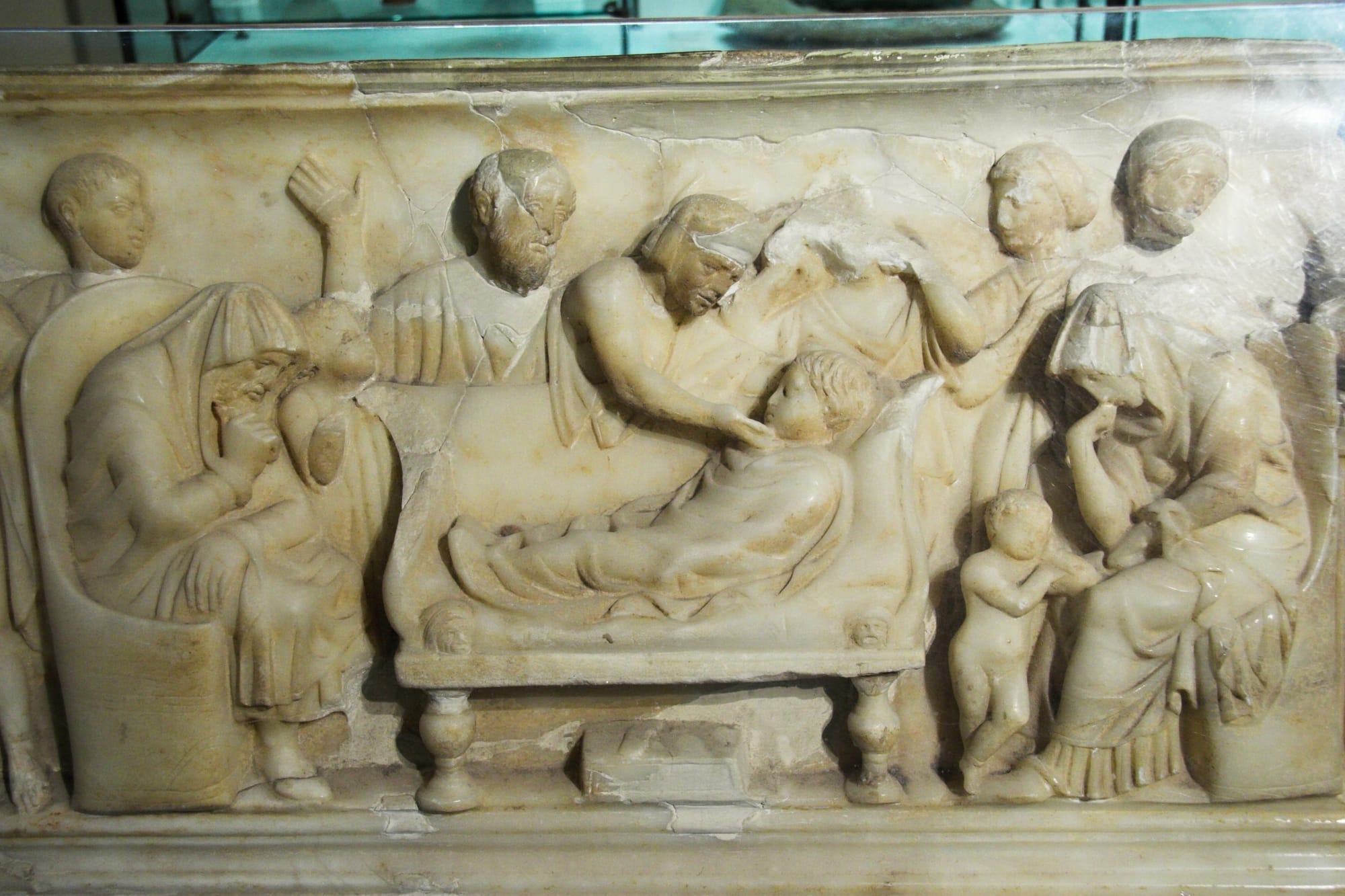
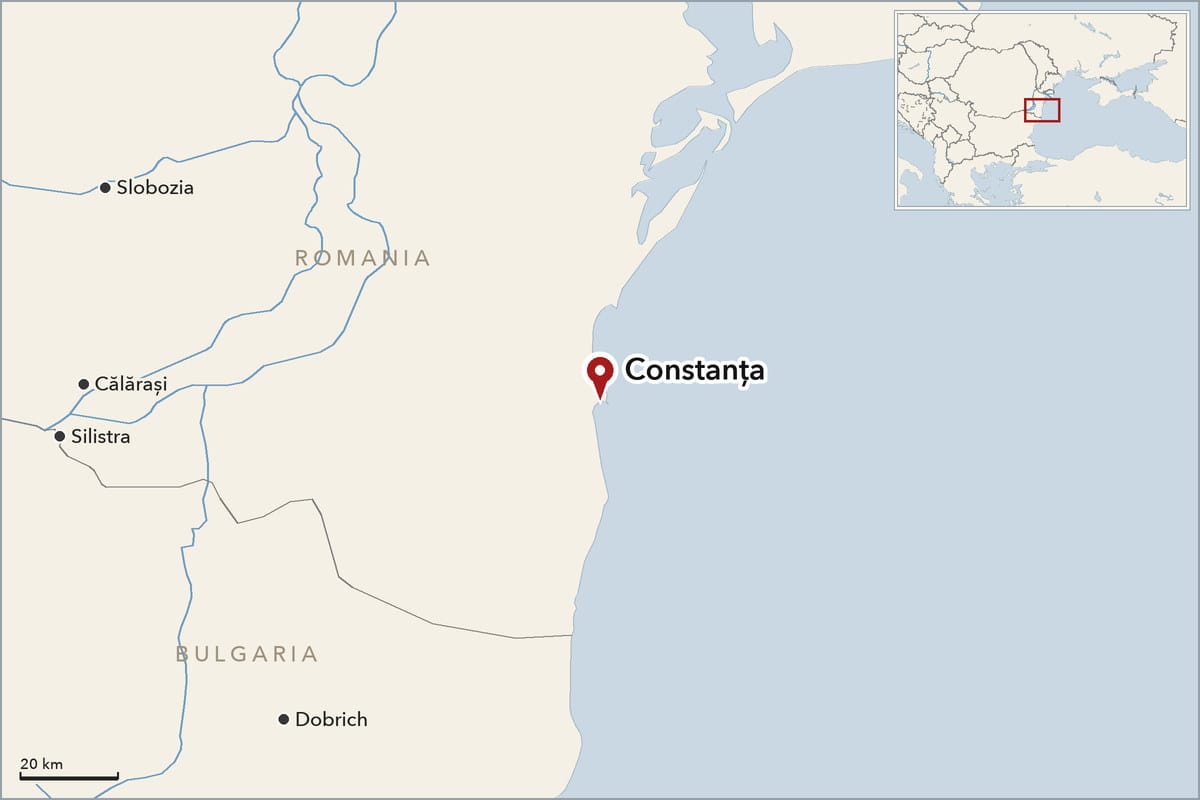
A sealed Roman-era sarcophagus holding a child's burial has been opened in Constanța, Romania, the modern city on the site of ancient Tomis. The Museum of National History and Archaeology Constanța announced the find on 27 October 2026, and held a press conference the next day. The child's age and sex are still to be determined.
What the museum says
According to the museum's own statement, its specialists found the child's grave during preventive archaeological excavations in the Flămânda area of Constanța. The archaeologists on site, Constantin Băjenaru and Cătălin Nopcea, had flagged the possibility of an intact sarcophagus as early as 22 October 2026. It was then lifted out and taken to one of the museum's locations.
On 27 October a team of conservators, restorers and archaeologists opened it. Inside was the burial of a child in a wooden coffin. The museum lists the grave goods as several bronze dress items, clay toys and flower garlands. After first observations, it dates the find to the 2nd–3rd centuries AD. It places the grave on the northern edge of the Tomis necropolis, near an important ancient road.
The museum calls the discovery important mainly because the sarcophagus and its grave goods survived untouched. It says they offer valuable information on funerary practices in Roman-era Tomis, and describes itself as still at the start of the documentation.
The press conference
Reporting by Agerpres, the Romanian national news agency, on the 28 October press conference gives the archaeologists' words in its English translation. Băjenaru called the find "exceptional and extremely rare" for Tomis. He said the sarcophagus lay very close to an ancient road that connected Tomis to Histria, and that nearby graves the team had excavated suggest an area that very probably belonged to an important family. On the sarcophagus itself he said: "Small sarcophagi used for the burial of children are extremely rare, and we have never found anything like this here before."
Archaeologist Ana Hamat described the grave as found virtually undisturbed, in a sealed, intact sarcophagus. She called it "a window into life some 1,800 years ago" and compared such windows to Pompeii and Herculaneum, while noting that Tomis has no untouched city. She added that, at least as of the previous day, it was probably "Europe's archaeological discovery of the moment". Agerpres reports that the child is believed to be a young boy. Hamat said the child will be looked after carefully and will probably go on display once the analyses are finished.
Details from The History Blog
The History Blog, writing on 31 October, adds detail on the contents. It says the lid was sealed with lead clamps and mortar, and that the whole unit was taken to the museum to be opened. Inside it reports the skeletal remains of a young child and well-preserved organic material: an inner wooden coffin whose side panels still have their dovetail joints, a burial shroud, and floral offerings including leaves folded into small bundles.
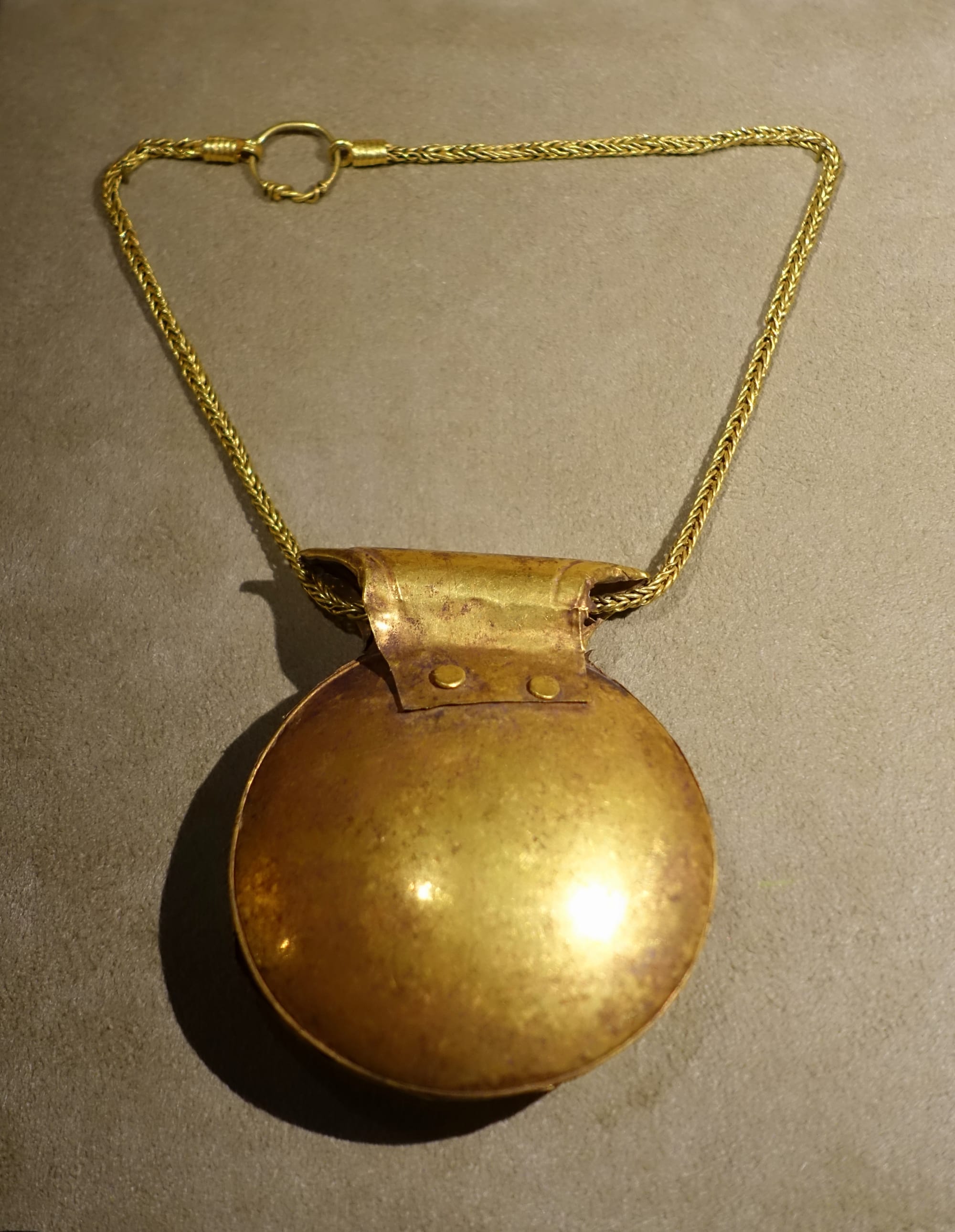
It also describes two clay toys with surviving painted decoration, a horse on wheels and a rooster-shaped rattle that still rattles when shaken. The child wore bronze bracelets and a necklace with two bulla pendants.
What is still open
The History Blog notes that bullae were usually worn by Roman boys, but that the child's sex will not be known until the bones are examined thoroughly. It says the age is also to be determined. The sarcophagus was small, suited to a child of about four or five, but the blog says the rattle suggests a younger child. It also says the quality of the sarcophagus and the finery inside indicate a family of means.
Those are the blog's readings, offered before any analysis of the remains. They sit alongside Băjenaru's more specific point that the burial lies in an area he links to an important family. My own view is that the case for a wealthy family is reasonable but still circumstantial until the bones and the burial context have been studied.
Tomis in brief
The History Blog gives the background. It says Tomis was founded in the 6th century BC by Greek colonists from Miletus and annexed by Rome in 29 BC. It adds that the poet Ovid was banished there by Augustus in 8 AD, and that the city became capital of the province of Scythia Minor in the 3rd century.
Sources
Agerpres (2026) 'Rare intact Roman-era child's sarcophagus discovered in Romania's Constanta', Agerpres, 28 October 2026, available at: https://agerpres.ro/english/2026/10/28/rare-intact-roman-era-child-s-sarcophagus-discovered-in-romania-s-constanta--1607855 (Accessed: 5 November 2026).
All That's Interesting (2026) 'Archaeologists In Romania Have Discovered An 1,800-Year-Old Sarcophagus Of A Roman Child — And It's Filled With Toys', All That's Interesting, 2 November 2026, available at: https://allthatsinteresting.com/romania-roman-child-sarcophagus (Accessed: 5 November 2026).
Muzeul de Istorie Națională și Arheologie Constanța (2026) 'Descoperire arheologică importantă la Constanța: un sarcofag roman intact, aparținând unui copil', MINAC, 27 October 2026, available at: https://minac.ro/descoperire-arheologica-importanta-la-constanta-un-sarcofag-roman-intact-apartinand-unui-copil/ (Accessed: 5 November 2026).
The History Blog (2026) 'Exceptional Roman child's sarcophagus found with toys inside', The History Blog, 31 October 2026, available at: https://www.thehistoryblog.com/archives/77250 (Accessed: 5 November 2026).
Picture credits
- Top picture: Not the Tomis find: a marble Roman child's sarcophagus, 100-200 AD, from the Roman cemetery outside Porta Aurea at Agrigento, now in the Archaeological Museum of Agrigento. Image: Sarcophagus, marble, mourning for child, 100-200 AD, AM Agrigento, 121061.jpg by Zde, CC BY-SA 4.0, via Wikimedia Commons
- Image: Constanța panorama — Rar3sh, CC BY-SA 2.5 (source)
- Image: Necklace with lenticular bulla, Ostia, Augustan age, Vatican Museums — photo Daderot (source)
- Map: drawn from Natural Earth (public domain) and Wikidata.


