On 20 October 2026 the regional government of Murcia announced that excavators at the Roman baths of Fortuna, in south-eastern Spain, had found a monumental Roman inscription. The announcement describes it as almost 2,000 years old. The surviving stone is small beside the text it once belonged to. Only a fragment remains, but on the size of its letters and of the surviving block, the regional government estimates that the whole inscription may have run to at least 4.8 metres.
What was found
The inscription sits on a stone block of almost 90 centimetres. It has two lines of text, set between mouldings. The letters of the main line reach 23 centimetres in height, a size the regional government calls extraordinary. It says that puts the piece among a small group of monumental inscriptions known in the Iberian Peninsula. Within the Region of Murcia, it adds, only three inscriptions with letters of similar size are known, all of them from Cartagena, the ancient Carthago Nova.
Arkeonews, reporting on 23 October, adds that the stone carries lettering of two sizes, the larger about 23 centimetres and the smaller around 13 centimetres.
The excavation is directed by Gonzalo Matilla of the University of Murcia. According to the regional government, the block turned up while a zone hit by the collapse of an ancient structure was being cleaned. It had been built into a wall that itself reused earlier architectural elements. That matters for interpretation: Arkeonews points out that a block reused in a later wall does not show where the inscription first stood.
How old, and what it says
The dating is tentative. The regional government says preliminary analysis has identified part of a Roman name and allows a possible date between the end of the 1st century BC and the 2nd century AD. Some indications, it says, point to a possible link with the age of Augustus. Arkeonews gives his reign as 27 BC to AD 14 and says the precise date and original location remain uncertain.
The text is fragmentary. Arkeonews reports that the full wording, and the person or institution associated with it, have not been established. The regional government says the size of the letters and the surviving block led to the estimate of at least 4.8 metres. It says the monumental scale and certain features of the text support the hypothesis that the inscription belonged to a commemorative architectural project. That is a hypothesis, and the name and wording that would test it have not been read in full.
The baths and the money
The announcement places the find in a new phase of work funded by the regional government through its Consejería de Turismo, Cultura y Deportes, with 150,000 euros. It says the work has completely cleared the complex's pool and traced the outline of the main building, which allows a more precise reading of the layout. The excavation also includes recovering and documenting structures and architectural elements, and work to improve understanding of the site and its future presentation. The baths were declared a Bien de Interés Cultural in 2016.
Patricio Sánchez, the regional Director General of Cultural Heritage, visited the site on 20 October with Fortuna's mayor, Catalina Herrero, to oversee the removal of the stone. He described the find as exceptional, both for its dimensions and for the historical information it could yield about one of the most important thermal complexes in the Region of Murcia.
Next steps
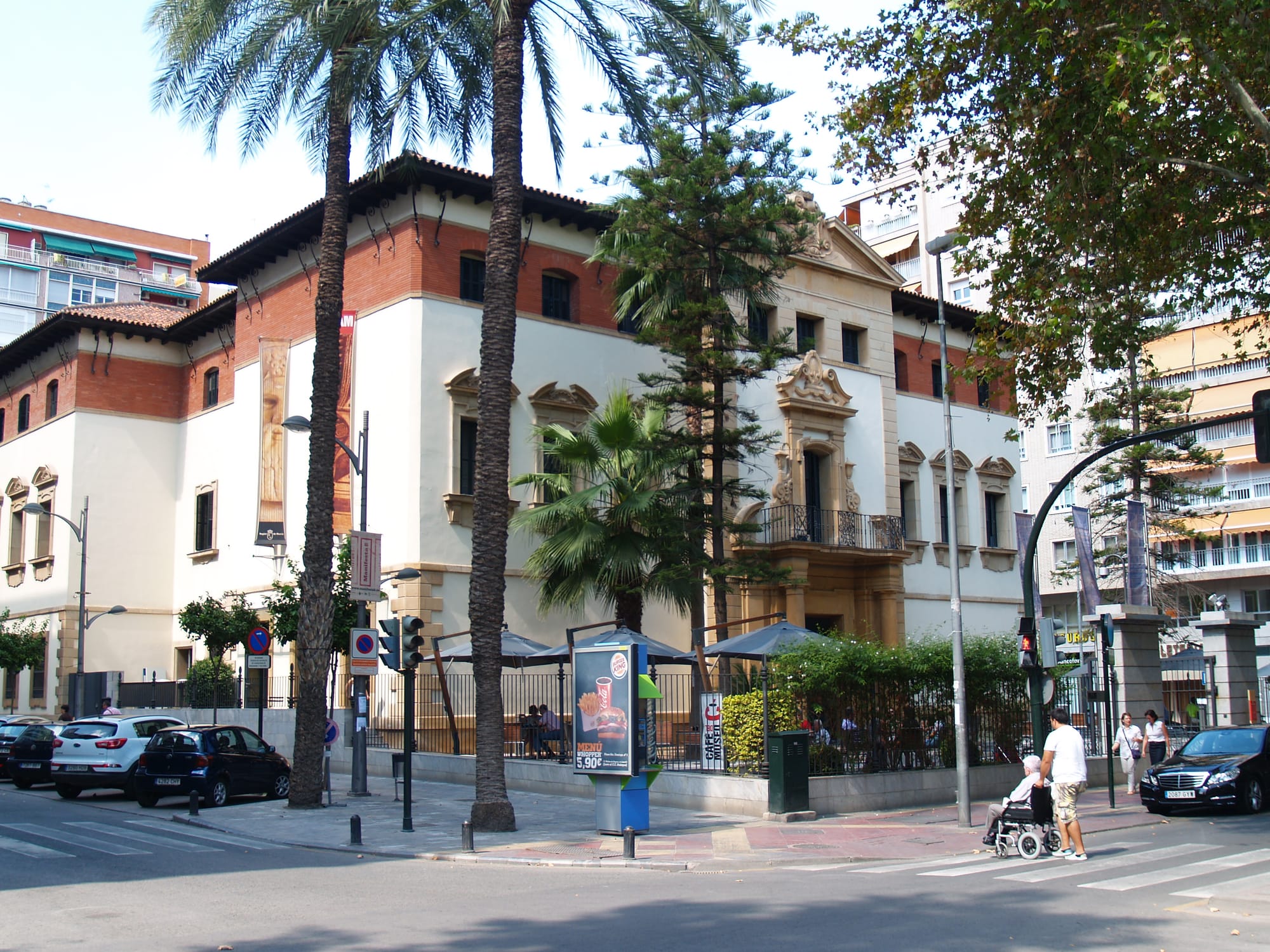
The regional government said the stone would be taken to the Archaeological Museum of Murcia for study, documentation and conservation. Sánchez said the move would allow the piece to be studied with the necessary technical safeguards. He said it could add new evidence on the importance the site reached in Roman times.
My own view is that the next step matters more than the headline figure. Arkeonews suggests that letters this large were meant to be seen as part of a substantial architectural setting. The name, the wording and a secure date will say what it was for, and those depend on the study to come.
Sources
Altuntaş, L. (2026) 'Rare 4.8-Meter Roman Inscription Possibly Dating to Augustus' Reign Discovered', Arkeonews, 23 October 2026, available at: https://arkeonews.net/rare-4-8-meter-roman-inscription-possibly-dating-to-augustus-reign-discovered/ (Accessed: 27 October 2026).
Comunidad Autónoma de la Región de Murcia (2026) 'El Museo Arqueológico de Murcia custodiará para su estudio una inscripción romana descubierta en los Baños Romanos de Fortuna', CARM, 20 October 2026, available at: https://www.carm.es/web/pagina?IDCONTENIDO=126415&IDTIPO=10&RASTRO=c54%24s3%24m2500 (Accessed: 27 October 2026).
Picture credits
- Top picture: The Archaeological Museum of Murcia. Image: Exterior of the Museo Arqueológico de Murcia: Morini33, CC BY-SA 3.0 es (Wikimedia Commons)
