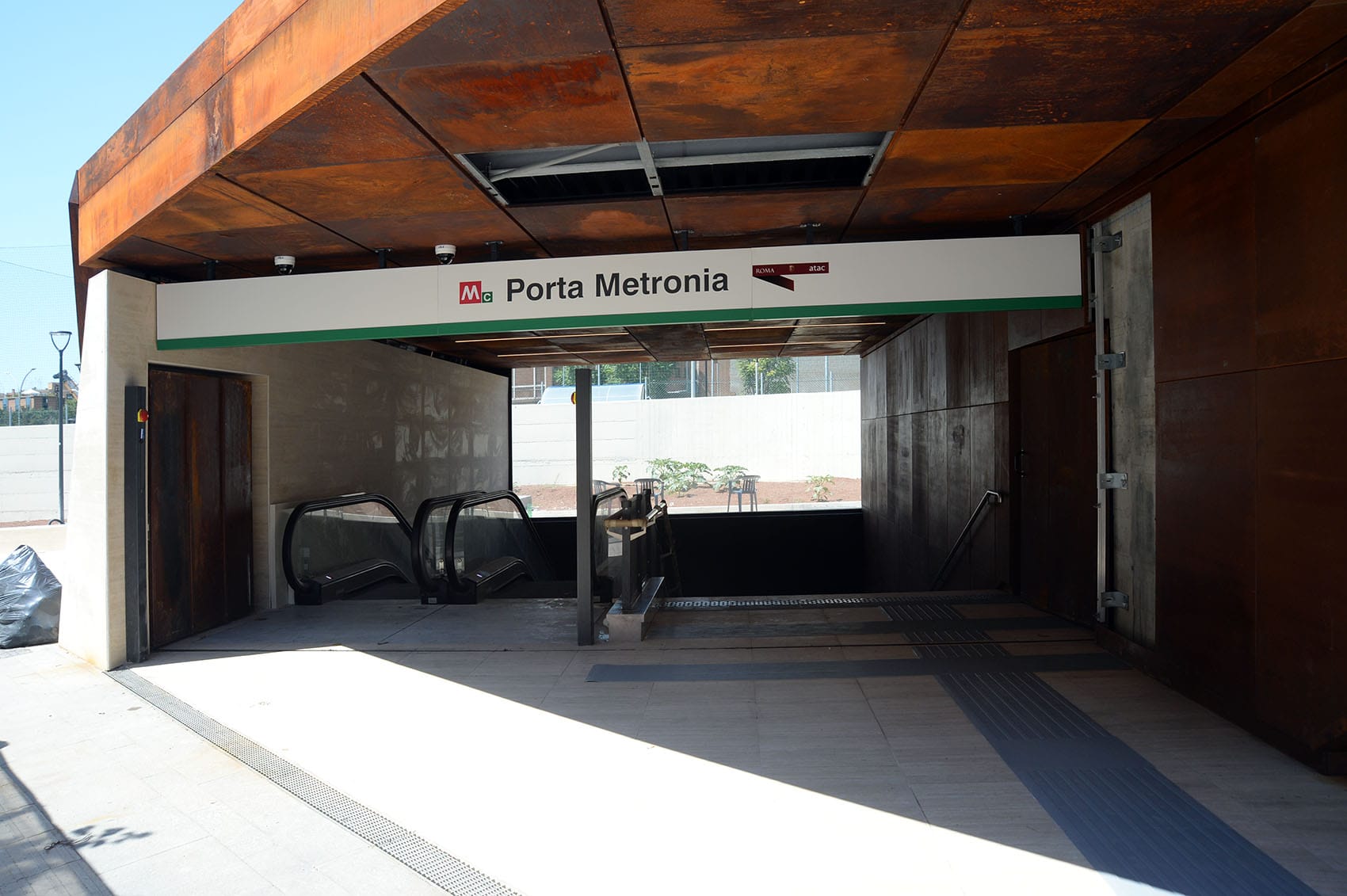
Top Image: The Porta Metronia metro station, Rome, photographed 8 August 2025. (Image: indeciso42 / Wikimedia Commons, CC BY-SA 4.0)
On the afternoon of 16 December 2025, Rome's mayor Roberto Gualtieri and the president of Municipio I, Lorenza Bonaccorsi, took the first passenger journey on the new central section of Metro Line C. The train ran from San Giovanni to the foot of Via dei Fori Imperiali. Two stations had opened: Colosseo/Fori Imperiali, and Porta Metronia. Both are described in the official announcements as stazioni museo, or museum stations. Both sit on top of, or beside, archaeological remains that the excavation itself uncovered.
The finds are the point. Not the ribbon-cutting, not the ministerial speeches. The point is what was in the ground, and what the official record says about it.
The barracks at Porta Metronia
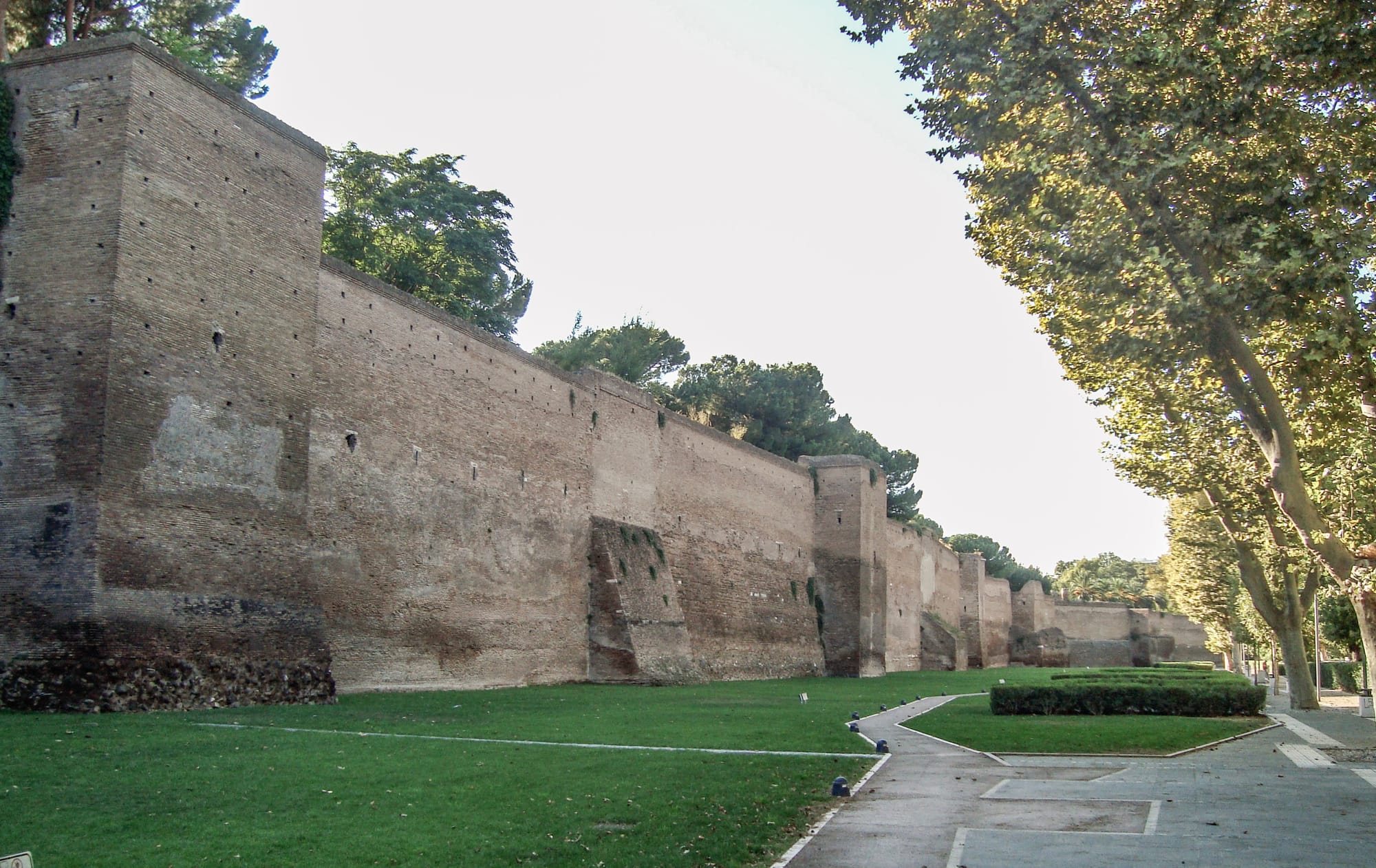
The station sits in Piazzale Ipponio, adjacent to the Aurelian Walls. Five underground levels, a maximum excavation depth of 30 metres. The structure is rectangular. Roma Capitale lists two metro entrances. The atrium carries large-format photographic reproductions of the excavation and of selected finds, including a piece of gilded glass representing the goddess Roma.
What was found: a Roman barracks, 2nd century CE, with the commander's house attached. The commander's house has frescoes and mosaic floors. The Ministry of Culture (MiC) says the structures, with 600 archaeological finds, will become a museum. The MiC's announcement notes that the museum's narrative will run from the Republican period, before the barracks was built, to the present day.
The museum for the barracks has its own entrance. The MiC is explicit: "Il museo e la stazione sono collegati da una piazza ipogea ma hanno entrate separate." The museum and the station are linked by an underground square but have separate entrances. The MiC said metro passengers would be able to look at the barracks through large glass panels opening onto that square. The museum itself was designed with virtual reality and 3D and is curated by the Soprintendenza Speciale di Roma under the MiC. It was announced as "aperto nella prossima primavera," open the following spring — spring 2026.
The station is open.
The wells at Colosseo
Four underground levels, a width between 30 and 50 metres, a depth of up to 32 metres. It sits between the Colosseum and the Basilica of Maxentius, on Via dei Fori Imperiali, with a direct interchange to the existing Line B Colosseo stop.
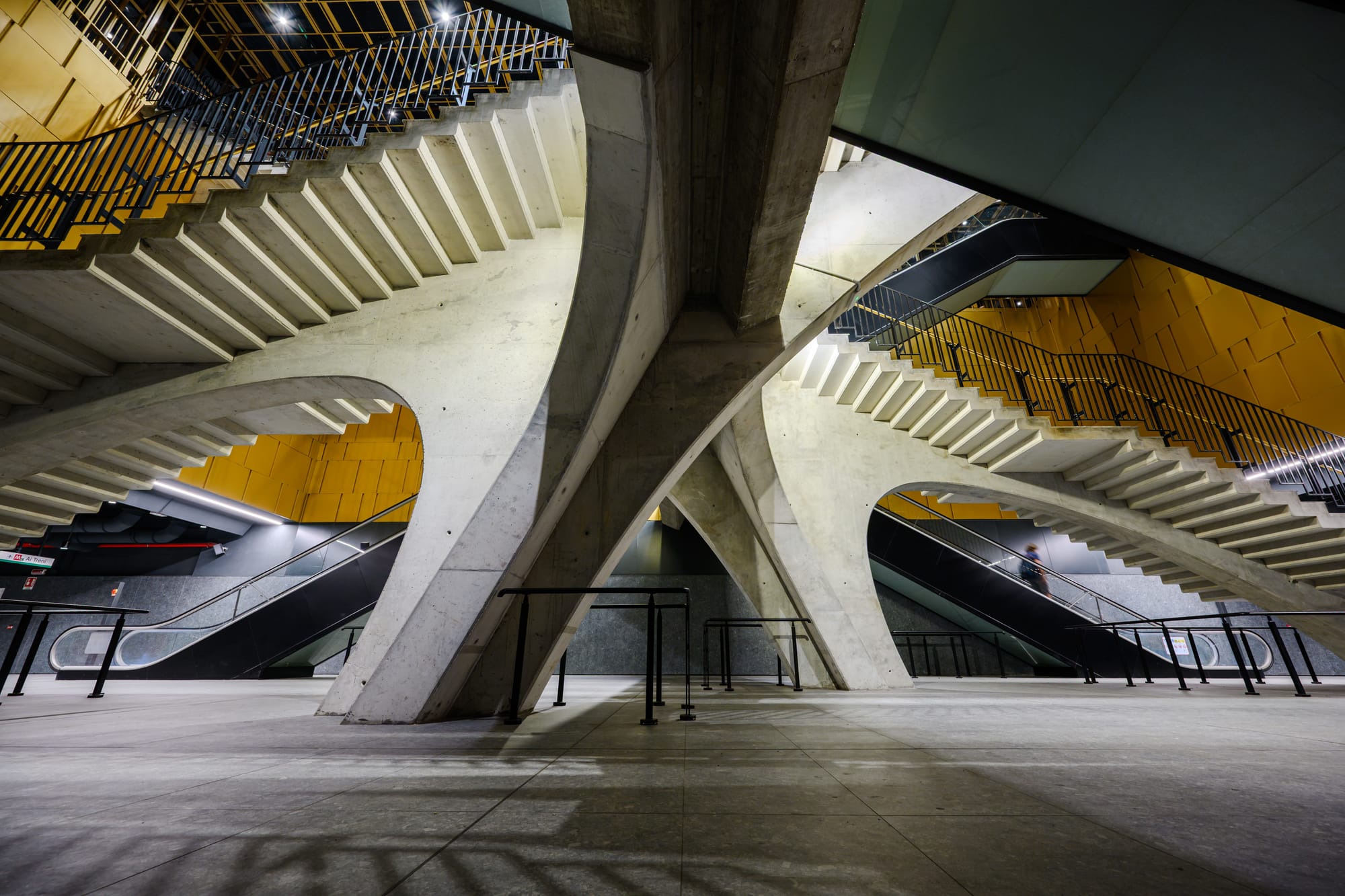
The museum pathway inside the station is curated and funded by the Parco Archeologico del Colosseo, developed with the Sapienza University of Rome's Department of Architecture and Design. It runs through five thematic areas, from the entrance down to the platform level, in dialogue with the station's central staircase. The narrative theme is the well.
The finds that anchor the display:
- 28 wells of Republican date, constructed between the 5th and 2nd centuries BCE. They served the inhabitants of the Velia hill, providing water. The lining slabs in tufa have been repositioned near their find-spot. Three large cylindrical glass cases and a video explain their construction and use.
- A private balneum (bath) from one of the domus re-emerged in Piazza del Colosseo, dated between the 2nd century BCE and the fire of 64 CE. The stepped bath tub and the laconicum were excavated, removed, and reinstalled in the station, with the materials found and explanatory reconstructions of their original use and appearance.
- An imperial domus with frescoes, accessible from Via dei Fori Imperiali through the Centro Informazioni del Clivo di Acilio. The frescoes are visible through large glass panels.
- An oculus in the connection passage between Line B and Line C, offering an unusual view of the Colosseum from below. It is the same view the archaeologists and workers had while identifying, documenting, and preserving the context.
The MiC's announcement frames the station's design around the well as metaphor: the station descends into the ground the way a well descends in search of water, bringing to the surface testimony from the past. The interplay of light and shadow is carried in the chromatic and material choices of the display. Precious materials mark the exhibition areas, and a reticulated structure wraps the descender shafts, the station's "maestoso foro", its majestic hole.
The technique
Both stations were built using what the project documentation calls the "top-down archeologico" method, developed specifically for the historic-centre stations of Rome. Intermediate slabs are installed progressively as excavation advances from the surface downward. This maintains structural stability while keeping the archaeological investigation continuous. The total volume of archaeological excavation along the full Line C is 625,000 cubic metres.
The MiC's department head, Alfonsina Russo, said the investigations ran from 2015 to 2020, with archaeologists, restorers, architects, and engineers collaborating. The Parco Archeologico del Colosseo's director, Simone Quilici, put the conceptual shift more sharply: the project moved "dal concetto di rischio archeologico a quello di potenziale archeologico", from the concept of archaeological risk to that of archaeological potential. Preventive archaeology and public archaeology, in his words, were joined in a single process. At Porta Metronia, according to Webuild, the station's design had to be redefined to preserve and enhance the barracks.
The line
As of the December 2025 opening, 24 stations are operational along 22 kilometres, from Monte Compatri/Pantano in the east to Colosseo/Fori Imperiali in the historic centre. The full line, when complete, is projected at 29 kilometres and 31 stations, extending to Farnesina.
Colosseo/Fori Imperiali and Porta Metronia are two of six archaeo-stations planned for the line. San Giovanni is already operational. Venezia is under construction, with what Webuild calls "macro-phase 2" underway. Chiesa Nuova and San Pietro are at the design phase. At the December 2025 opening, Webuild said executive design was in progress for Ottaviano and Clodio/Mazzini, and final design for Auditorium and Farnesina. The section connecting Venezia to Clodio/Mazzini will pass under the Tiber.
The general contractor is the Metro C consortium, led by Webuild with Vianini Lavori, Hitachi Rail, CMB, and CCC. The works were commissioned by Roma Metropolitane on behalf of Roma Capitale.
What the record says
The evidence is in the ground, and the evidence is in the glass. The Porta Metronia barracks museum was set for spring 2026.
Sources
MiC – Ministero della Cultura (2025) 'MiC, Giuli a inaugurazione stazioni Metro C: "Roma città millenaria, si trasforma nella città del futuro"', Ministero della Cultura, 16 December 2025, available at: https://cultura.gov.it/comunicato/28471 (Accessed: 5 October 2026).
Roma Capitale (2025) 'Metro C: aperte le stazioni Colosseo e Porta Metronia', Comune di Roma, 16 December 2025, available at: https://www.comune.roma.it/web/it/notizia/metro-c-aperte-stazioni-colosseo-e-porta-metronia.page (Accessed: 5 October 2026).
Webuild Group (2025) 'Webuild: Archeo-Stations Colosseo/Fori Imperiali and Porta Metronia open with three new km for Line C of Rome Metro', Webuild, 16 December 2025, available at: https://www.webuildgroup.com/en/media/press-notes/webuild-archeo-stations-colosseofori-imperiali-and-porta-metronia-open/ (Accessed: 5 October 2026).