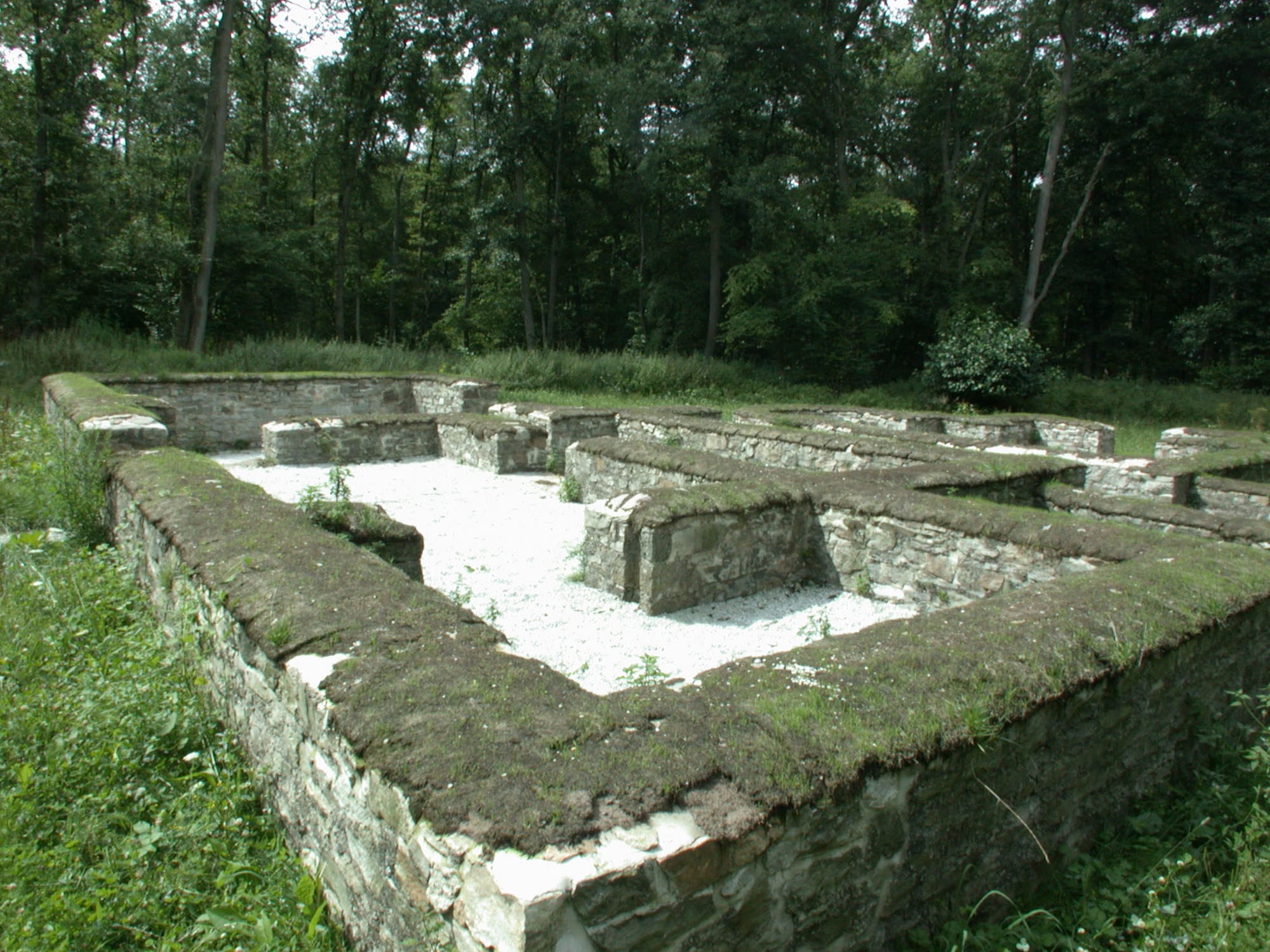
A Roman temple dedicated to the war god Mars has turned up in the woods of the eastern Taunus, in Hesse. The Hessian State Office for Monument Preservation announced the find on 25 September 2026, through its archaeology service, hessenARCHÄOLOGIE. The temple stood in the vicus, the civilian settlement beside the Roman fort of Kapersburg.
A village beside the fort
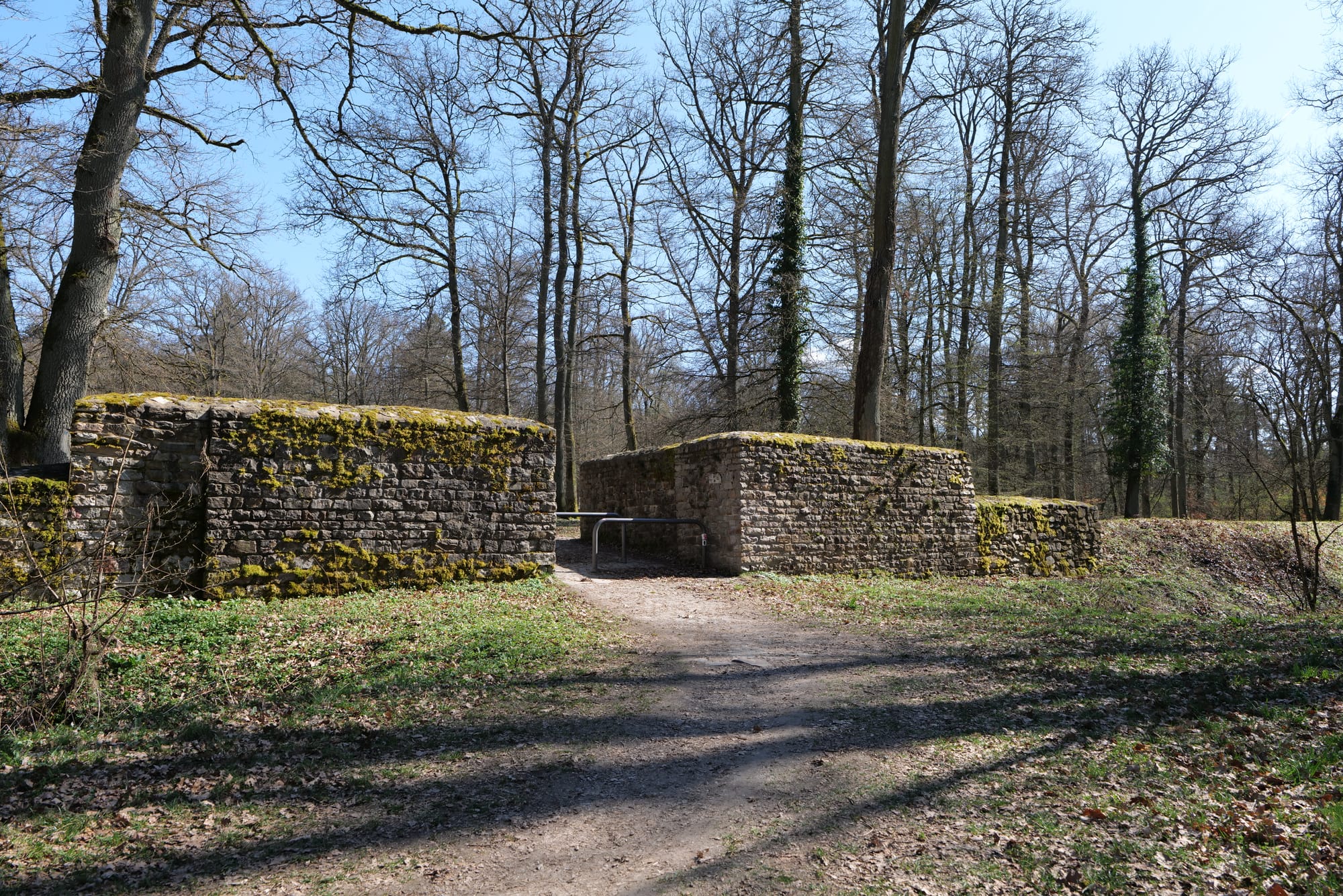
Live Science, which cited a translated version of the 25 September statement, places the site roughly 16 miles (26 kilometres) north of Frankfurt. The heritage office calls Kapersburg one of the best-preserved and best-known forts on the Upper German-Raetian Limes in Hesse. It says a Roman auxiliary unit, the Numerus Nidensium, was stationed there for about 150 years. The conventional account, which the office summarises, is that the Romans abandoned the fort in the middle of the third century, in the aftermath of the so-called Limesfall.
Live Science adds that the earliest excavations, around the turn of the 20th century, showed the fort was built in the early second century, likely under either Trajan or Hadrian.
The fort has long been the focus of study. The settlement beside it has not. The heritage office says archaeologists have been investigating the vicus only since 2024, together with the Provincial Roman Seminar at the University of Frankfurt. According to Kai Mückenberger, the regional archaeologist and Limes coordinator, as reported by Live Science, practically nothing was known about the vicus before then. The temple came in the project's third year. The team is led by Mückenberger and excavation director Manuel Pieper, and archaeologists from the Saalburg supported it. According to the heritage office, it was the Saalburg archaeologists who uncovered the temple.
What came out of the ground
Alongside the building remains, the heritage office reports two votive stones, a statuette of Victoria and fragments of another statue, probably Mars himself.
In a translated video cited by Live Science, Mückenberger said several fragments of a dedicatory inscription were found inside the temple. Experts have already translated part of it, and it mentions that the temple was dedicated to Mars. He also described a statuette of "a winged figure holding a palm branch and laurel wreath", which Live Science identifies as probably the goddess Victoria.
The inscriptions on the votive stones are already being studied in collaboration with the University of Frankfurt, in particular Professor Markus Scholz, according to the heritage office. He also produced the translation of a votive stone found in the previous year's campaign. That stone is now displayed in the Wehrturm Museum in Rosbach vor der Höhe.
Traces after the Romans left
Near the temple the team recovered a late-antique brooch (a fibula) and fragments of handmade pottery. The heritage office says that, if confirmed, these would be the first archaeological evidence of use of the area after the end of the Limes period. According to the office, the finds would already be attributable to the Alemanni living in the Wetterau. It adds that whether further traces of the settlement's late history exist remains to be seen.
Craftwork, rebuilding and a forest floor
The heritage office also reports extensive remains of craft activity, including the area of a forge. Levelling layers suggest the Romans flattened the workshop during a reorganisation of the settlement and later replaced it with residential buildings. Traces of Roman roads and evidence of terracing are helping the team judge the structure and extent of the vicus.
Live Science says the team found far fewer houses than expected, but much more evidence of craftwork, including blacksmith pits and ovens for drying wheat and baking bread. Live Science quotes Mückenberger: "These are all very technical elements related to local services, indicating that we're in a kind of intermediate area not directly adjacent to the fort itself, but perhaps more like the fort's craft area."
The evidence has survived because of where it lies. The heritage office says the structures sit only a few centimetres below the forest floor. Mückenberger said, as quoted by Live Science: "The astonishing thing is the exquisite preservation of the archaeological layers that start right beneath the forest floor." The heritage office quotes him (in German; this translation is The Jerusalem Post's): "Here we have layers of preservation that are unparalleled in Hesse, precisely because no agriculture has taken place here." He continues: "The forest has preserved everything over the last centuries, maintaining it for us to such an extent that we find layers that are otherwise always gone."
What the dig shows about the old account
The heritage office notes that the sequence of a 150-year garrison followed by abandonment is the one told by historians, and that the earliest excavations by the Reichslimeskommission under Louis Jacobi seemed to confirm it. But anyone who thinks that means everything is known about the fort, it says, need only go a few metres further into the forest. The office says the new findings are already considerable. It also notes that more than 125 years after Jacobi's investigation, the writing of the history of the Roman presence in Hesse is far from finished.
On the dig's future, the office says Mückenberger hopes to continue investigating the area with University of Frankfurt students the following year. Live Science reports that he and his team plan to continue the excavation next year.
Sources
Hessisches Landesamt für Denkmalpflege (hessenARCHÄOLOGIE) (2026) 'Ein Römerdorf wenige Zentimeter unter dem Waldboden', Hessen Denkmal, 25 September 2026, available at: https://denkmal.hessen.de/presse/ein-roemerdorf-wenige-zentimeter-unter-dem-waldboden (Accessed: 17 October 2026).
Killgrove, K. (2026) '1,800-year-old temple to Mars and statue of Victory unearthed at Roman military fort in Germany', Live Science, 5 October 2026, available at: https://www.livescience.com/archaeology/romans/1-800-year-old-temple-to-mars-and-statue-of-victory-unearthed-at-roman-military-fort-in-germany (Accessed: 17 October 2026).
Sela-Eitam, M. (2026) 'Archaeologists discover lost temple to war god near abandoned Roman military fort in Germany', The Jerusalem Post, 10 October 2026, available at: https://www.jpost.com/archaeology/article-911148 (Accessed: 17 October 2026).
Picture credits
- Top picture: The bath house at Kapersburg fort, photographed in 2006, not the newly found temple. Image: Kapersburg Badehaus, Volker Thies (Asdrubal), CC BY-SA 3.0, via Wikimedia Commons
- File photo: the Kapersburg fort ruins. Image: Kapersburg Taunus, Leonhard Lenz, CC0, via Wikimedia Commons
